


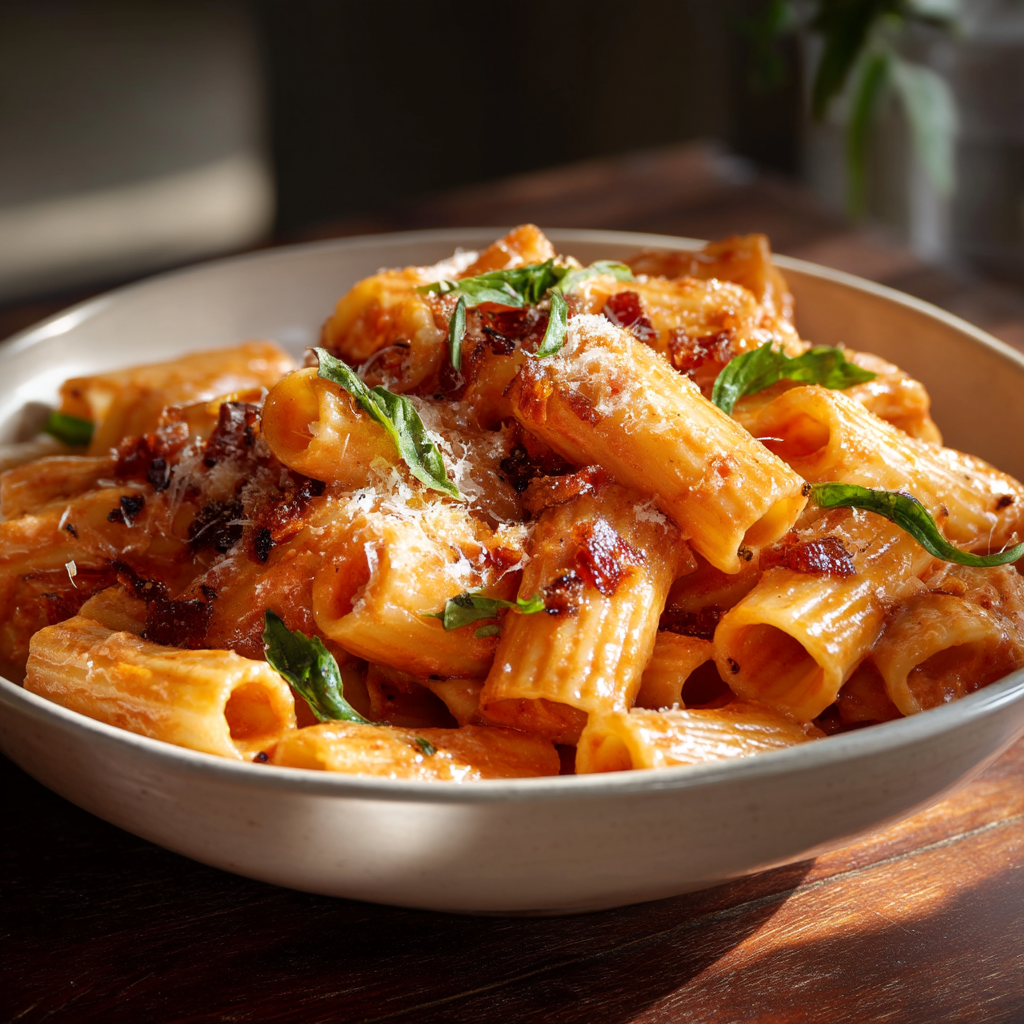
Easy Italian Pasta with Creamy Tomato and Pancetta
Recipe Overview
Dish Name: Rigatoni with Creamy Tomato-Pancetta Sauce
Cuisine: Italian | Category: Pasta Course | Serves: 4
Prep Time: 10 minutes | Cook Time: 20 minutes | Total Time: 30 minutes
Why This Works
This easy Italian pasta recipe delivers exactly what you need after a long day: rich comfort with minimal effort. The sauce builds itself while the pasta cooks, using good canned tomatoes, crispy pancetta, and a splash of cream to create something that tastes like you spent an hour at the stove. The pancetta fat becomes the cooking medium, the tomatoes provide acidity and sweetness, and the cream rounds everything into a cohesive sauce that clings to tube pasta. No complicated techniques, no hunting for exotic ingredients. Just intelligent use of good staples and proper timing. The result feeds four people generously with enough left over for someone to claim seconds. This is the kind of pasta that makes you remember why you cook at home.
Ingredients (Serves 4)
For the Pasta:
- 450g rigatoni or penne (bronze-cut if available)
- 2 tablespoons salt for pasta water
For the Sauce:
- 200g pancetta, cut into 1cm cubes
- 1 tablespoon extra virgin olive oil
- 4 garlic cloves, thinly sliced
- 1 small red chili, finely chopped (seeds removed for less heat)
- 800g whole peeled tomatoes (San Marzano if possible), crushed by hand
- 150ml heavy cream (35% fat minimum)
- 40g unsalted butter, cold
- 80g Parmigiano-Reggiano, finely grated, plus extra for serving
- Fresh basil leaves, 10-12 leaves torn
- Black pepper, freshly ground
Method
Mise en Place (10 minutes)
Cube the pancetta. Slice the garlic thinly so it cooks evenly without burning. Chop the chili. Crush the tomatoes by hand in a bowl – you want irregular chunks, not smooth puree. Grate the Parmigiano. Have your cream measured and butter cut. Fill a large pot with 4 liters of water and set it to boil with the salt.
The rigatoni shape matters here because the tube interior catches sauce. If you cannot find rigatoni, penne works nearly as well. Avoid thin pasta like spaghetti, which cannot hold this thick sauce properly.
Build the Base (5 minutes)
Add pancetta and olive oil to a large, cold skillet. Set over medium heat. The cold start renders the fat properly without burning the meat. Cook until the pancetta turns golden and crispy at the edges, about 5 minutes. The fat should pool in the pan.
Add garlic and chili to the pancetta fat. Cook for 60 seconds until the garlic turns fragrant and blonde. Do not let it brown. Burnt garlic destroys this sauce.
Cook the Tomatoes (8 minutes)
Add the crushed tomatoes to the pan. The mixture will sputter. Stir to combine, then let it simmer steadily. Season with a pinch of salt and several grinds of black pepper. The tomatoes need 8 minutes to break down and concentrate. Stir occasionally to prevent sticking.
While the sauce simmers, drop the rigatoni into the boiling water. Cook for 2 minutes less than the package directs. You want it quite firm because it finishes cooking in the sauce.
Finish the Sauce (3 minutes)
Lower the heat under the tomatoes to medium-low. Pour in the cream and stir until the color becomes pale orange-pink. Let this simmer gently for 2 minutes. The cream should not boil hard or it may split.
Reserve 200ml of pasta water before draining. Drain the rigatoni but do not rinse it. The surface starch helps the sauce adhere.
Marry the Pasta and Sauce (4 minutes)
Add the drained rigatoni directly to the sauce. Increase heat to medium. Toss everything together with tongs or two wooden spoons. The pasta should be coated but the sauce should still look slightly loose.
Add 100ml of the reserved pasta water and continue tossing. The starch in the water emulsifies with the fat, creating a glossy, clingy sauce. Add the cold butter in pieces and toss until it melts completely. The butter adds richness and helps the sauce adhere. Remove from heat.
Add half the Parmigiano and the torn basil. Toss again. The cheese will melt from residual heat. Taste and adjust salt. The pancetta is salty, so you probably need less than you think.
Plate and Serve
Divide among four warm bowls. The pasta should arrive at the table steaming. Top each portion with additional Parmigiano and a grind of black pepper. Serve immediately. This pasta does not wait well because the sauce tightens as it cools.
What You Need to Know
The pancetta renders better from a cold start. If you add it to hot oil, the outside crisps before the fat renders, leaving you with chewy bits instead of crispy ones.
Pasta water is not optional. The starch creates an emulsion between the fat and the tomato-cream base. Without it, the sauce separates and becomes greasy. Add it gradually – you can always add more but you cannot remove it.
Use good canned tomatoes. San Marzano tomatoes have lower acidity and natural sweetness. Standard canned tomatoes work but may need a pinch of sugar to balance the acid. Taste after the tomatoes simmer and adjust if needed.
How to know you nailed it: The sauce should cling to the pasta without pooling at the bottom of the bowl. The first bite should deliver cream, tomato sweetness, and the salty punch of pancetta simultaneously. The texture should be silky, not grainy or separated.
Make-ahead option: The tomato-pancetta base can be made up to 2 days ahead and refrigerated. Reheat it gently, then proceed with adding cream and finishing the pasta fresh. Do not add cream until you are ready to serve.
The Result
The finished pasta should arrive at the table glossy and cohesive, with sauce coating every piece of rigatoni rather than pooling underneath. The first bite delivers tomato sweetness balanced by salty pancetta, rounded out by cream and sharpened by Parmigiano. The texture is silky, the flavors are clear but integrated. The pancetta provides textural contrast – crispy bits against tender pasta and smooth sauce.
The basil adds a fresh note that keeps the dish from feeling heavy despite the cream. This is not delicate food. It is satisfying, substantial comfort that requires nothing more than the bowl and a fork. The richness makes it feel indulgent, but the 30-minute preparation keeps it realistic for a weeknight.
Nutrition Information Based on a 2,000 Calorie Diet (Per Serving)
| Nutrient | Amount | % Daily Value |
|---|---|---|
| Calories | 720 kcal | 36% |
| Total Fat | 34g | 44% |
| Saturated Fat | 17g | 85% |
| Cholesterol | 85mg | 28% |
| Sodium | 890mg | 39% |
| Total Carbohydrate | 78g | 28% |
| Dietary Fiber | 5g | 18% |
| Total Sugars | 8g | – |
| Protein | 24g | 48% |
| Vitamin D | 0.4mcg | 2% |
| Calcium | 280mg | 22% |
| Iron | 3.2mg | 18% |
| Potassium | 620mg | 13% |
Flavor Balance
Sweet (5/10): Natural tomato sugars provide baseline sweetness, enhanced by the caramelization of pancetta and garlic. The cream adds lactose sweetness that rounds out the acidity without making the dish sugary.
Salty (7/10): Pancetta is the primary salt source, delivering cured pork salinity throughout. Parmigiano adds sharp, aged salt notes. The pasta cooking water contributes background seasoning. This is intentionally well-salted comfort food.
Sour (3/10): Tomatoes provide gentle acidity, enough to cut through the cream and fat but not so much that the dish tastes sharp. Good San Marzano tomatoes have less acid than standard varieties, which is why they work better here.
Bitter (2/10): Minimal bitterness from the basil and a trace from the Parmigiano rind if you used it. The garlic adds a slight bitter edge if it colors at all during cooking. Overall, this is a low-bitter dish by design.
Umami (8/10): Strong umami presence from multiple sources. Pancetta provides cured meat glutamates, Parmigiano delivers aged cheese umami, and cooked tomatoes contribute concentrated glutamic acid. The combination creates savory depth that makes the dish satisfying without heaviness.
Wine Pairing
Recommended: Australian Sangiovese (McLaren Vale or Adelaide Hills)
Australian Sangiovese brings medium body, bright cherry fruit, and enough acidity to match the tomato base while standing up to the cream and pancetta. The wine’s savory, earthy notes complement the pork fat, while the fruit cuts through the richness. Australian examples tend to be riper and more approachable than their Italian counterparts, with softer tannins that work better with cream-based sauces. The acidity in Sangiovese is crucial here because it refreshes the palate between bites of this rich pasta. Look for producers like Coriole or SC Pannell.
Alternatives:
Australian Montepulciano (King Valley, Victoria): This grape variety offers dark fruit, moderate acidity, and a rustic edge that pairs naturally with tomato and pork. Australian versions have good structure without excessive tannin, making them cream-friendly. The wine’s earthiness echoes the savory elements in the pancetta while the fruit provides contrast to the saltiness. Chrismont and Dal Zotto make excellent examples.
Australian Chardonnay (Margaret River or Yarra Valley): If you prefer white wine, an oak-aged Chardonnay with some weight works surprisingly well. The buttery character mirrors the actual butter in the sauce, while the wine’s acidity cuts through the cream. Choose a Chardonnay with restrained oak and good minerality rather than heavily oaked styles. The wine should have texture and weight to match the pasta’s richness. Leeuwin Estate or Giaconda produce Chardonnays with the necessary structure.
HACCP-Compliant Storage and Safety
Cooling and Initial Storage: Cool leftover pasta rapidly within 2 hours of cooking. Spread in a shallow container no more than 5cm deep to reach 4°C within 4 hours total. Do not cool at room temperature for extended periods.
Refrigeration: Store covered in the refrigerator at 0-4°C for maximum 3 days. The cream sauce is the limiting factor. After 72 hours, discard regardless of appearance. Check for off odors or sour smell before reheating.
Freezing: Not recommended. The cream separates upon thawing and the pasta texture degrades significantly. If you must freeze, do so without the cream. Freeze the tomato-pancetta base separately for up to 1 month at -18°C or below. Thaw in refrigerator overnight, reheat, then add fresh cream.
Reheating: Reheat to a minimum internal temperature of 75°C throughout. Add 2-3 tablespoons of water or stock to the pasta before reheating to restore moisture. Microwave on medium power, stirring every 60 seconds, or reheat in a covered pan on the stovetop over medium-low heat. Do not reheat more than once.
Food Safety Notes: The pancetta is cured but should still be cooked until crispy. Raw cream must be kept refrigerated and used before the expiration date. If cream shows any signs of curdling or sour smell before use, discard it. Pasta water can harbor bacteria if left at room temperature, so discard any unused pasta water after cooking.
Disposal Guidance: Discard pasta that has been at room temperature for more than 2 hours, shows any mold growth, has developed an off odor, or has been stored beyond the maximum holding times specified above.
