


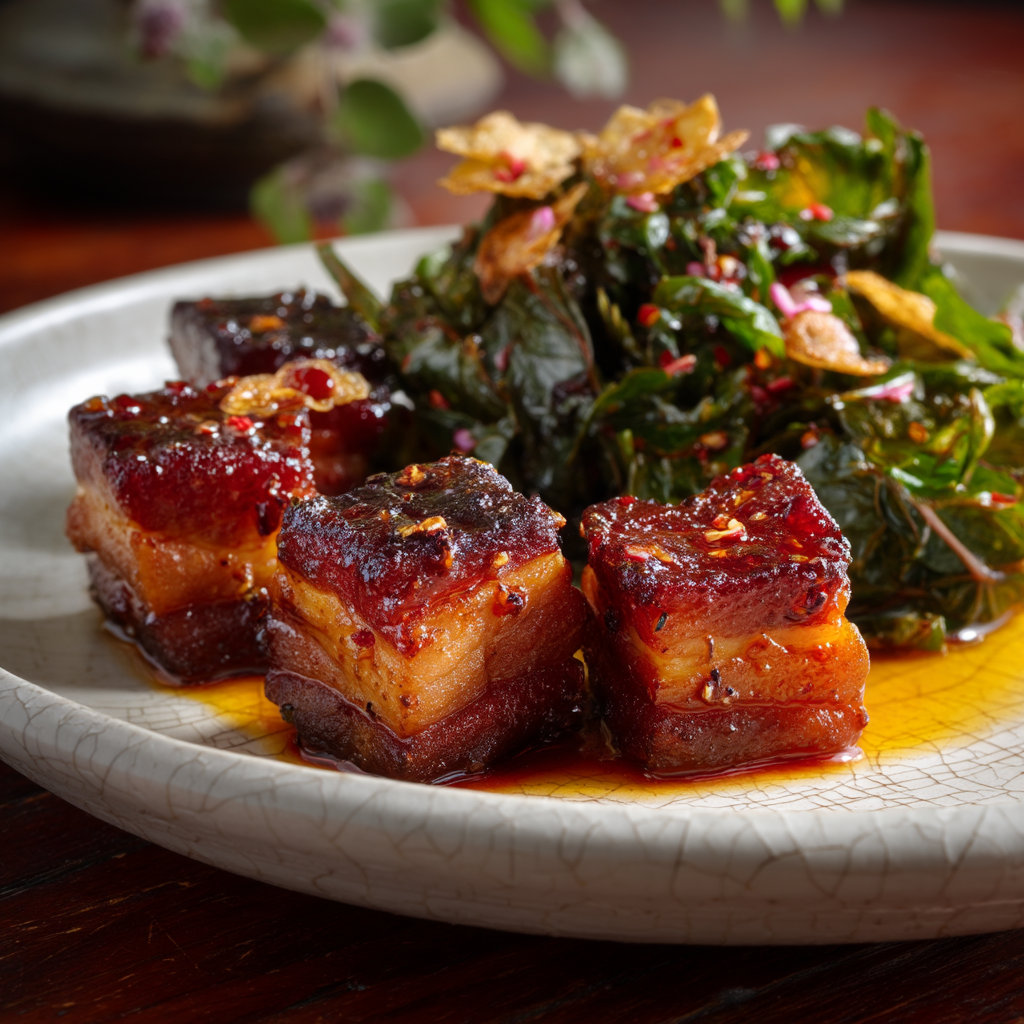
Filipino-Chinese Braised Pork Dinner with Star Anise, Calamansi & Australian
Recipe Overview
Dish Name: Star Anise Braised Pork Belly with Calamansi-Tamarind Glaze and Quick-Pickled Mustasa Cuisine: Filipino-Chinese | Category: Meat Course | Serves: 4 Prep Time: 30 minutes | Cook Time: 3 hours 15 minutes | Total Time: 3 hours 45 minutes
Why This Works
This Filipino-Chinese braised pork dinner doesn’t exist in any cookbook because it shouldn’t. Chinese lu-style braising demands soy depth and aromatics. Filipino cooking insists on souring agents and patis funk. This recipe forces them into the same pot and the result is a lacquered, intensely flavored pork belly that splits the difference between hong shao rou’s sweetness and paksiw’s bright acidity. The long braise renders the fat completely, the muscovado-calamansi reduction gives you a sticky, caramelized crust under the broiler, and the quick-pickled mustard greens cut through richness like a knife. You get five-spice warmth, fish sauce umami, citrus brightness, and annatto-garlic fat in every bite. It’s the dinner you serve when you want to show off without explaining yourself.
Ingredients (Serves 4)
For the Braised Pork:
- 1200g pork belly, skin-on, cut into 5cm squares
- 500ml water
- 250ml light soy sauce
- 120ml patis (fish sauce)
- 100ml calamansi juice (fresh, about 20-25 fruits; lime juice works but lacks complexity)
- 60g tamarind paste, dissolved in 80ml warm water, strained
- 80g muscovado sugar
- 6 star anise pods
- 1 cinnamon stick (8cm)
- 8 garlic cloves, smashed
- 60g ginger, sliced into coins
- 4 dried bay leaves
- 1 teaspoon whole black peppercorns
- 2 tablespoons neutral oil
For the Quick-Pickled Mustasa:
- 400g mustard greens (mustasa), cut into 4cm pieces, stems separated from leaves
- 200ml cane vinegar (sukang iloko preferred)
- 80ml water
- 40g sugar
- 1 tablespoon salt
- 1 teaspoon Sichuan peppercorns, lightly crushed
- 3 garlic cloves, thinly sliced
For the Crispy Atsuete Oil:
- 60ml neutral oil
- 2 tablespoons annatto seeds (atsuete)
- 8 garlic cloves, thinly sliced
- Pinch of salt
For the Glaze:
- 200ml reserved braising liquid
- 40g muscovado sugar
- 2 tablespoons calamansi juice
Method
Mise en Place (30 minutes)
Get everything prepped before you touch the stove. Cut pork belly into uniform squares so they cook evenly. Juice your calamansi, dissolve and strain the tamarind paste to remove seeds and fibers. Separate mustard green stems from leaves since stems need more pickling time. Smash garlic cloves for the braise with the flat of your knife. You’ll need a heavy-bottomed pot or Dutch oven with a lid, a fine-mesh strainer, a small saucepan for the oil, and a broiler-safe baking dish.
Sear the Pork Belly (15 minutes)
Heat 2 tablespoons neutral oil in your Dutch oven over medium-high until it shimmers. Working in batches to avoid crowding, sear pork belly squares fat-side down first until deeply golden, about 4 minutes per side. You’re not cooking them through, you’re building fond and rendering some fat. Remove to a plate. Pour off all but 2 tablespoons of fat.
Build the Braising Liquid (5 minutes)
Drop heat to medium. Add smashed garlic and ginger coins to the remaining fat. Let them sizzle for 90 seconds until fragrant but not colored. Add star anise, cinnamon stick, bay leaves, and peppercorns. Toast for 30 seconds. Pour in soy sauce, patis, water, strained tamarind liquid, calamansi juice, and muscovado sugar. Stir to dissolve sugar. This is your master stock, Filipino-Chinese style. The tamarind and calamansi provide acidity that will tenderize and brighten what would otherwise be a one-note sweet braise.
Braise the Pork (2 hours 30 minutes)
Return pork belly to the pot, arranging pieces in a single layer if possible. Liquid should come about two-thirds up the sides of the meat. Bring to a boil, then immediately reduce to the barest simmer. Cover and braise for 2.5 hours, flipping pieces every 45 minutes. You want gentle bubbles, not a rolling boil. The pork is done when a chopstick slides through with zero resistance and the fat is completely gelatinous. Remove pork to a plate and strain braising liquid through a fine-mesh strainer into a bowl. Discard solids.
Make the Quick-Pickled Mustasa (10 minutes active, 30 minutes pickling)
While pork braises, combine cane vinegar, water, sugar, salt, and crushed Sichuan peppercorns in a small saucepan. Bring to a boil, stirring to dissolve sugar and salt. Remove from heat. Place mustard green stems in a heatproof bowl, pour hot brine over them. Let stand 15 minutes. Add sliced garlic and mustard green leaves. Let stand another 15 minutes. The stems will have bite, the leaves will wilt and absorb brine. This cuts the pork’s richness with sharp acidity and peppercorn tingle.
Make the Crispy Atsuete Oil (8 minutes)
Heat neutral oil and annatto seeds in a small saucepan over medium-low heat. The oil will turn vivid orange-red within 3 minutes. Once deeply colored, strain out and discard seeds. Return oil to pan, add sliced garlic, and fry over medium heat until garlic is golden and crispy, about 4 minutes. Watch it closely in the final minute as garlic goes from perfect to burned fast. Strain garlic chips onto paper towels, season with a pinch of salt. Reserve the crimson oil separately. This is your finishing fat and textural garnish.
Reduce the Glaze (7 minutes)
Pour 200ml of your strained braising liquid into a small saucepan. Add 40g muscovado sugar and 2 tablespoons calamansi juice. Bring to a boil over medium-high heat and reduce by two-thirds until syrupy and coating the back of a spoon, about 6-7 minutes. This concentrated glaze is what gives you the lacquered finish.
Broiler Finish (5 minutes)
Position oven rack 15cm from broiler element and heat broiler to high. Arrange braised pork belly pieces in a single layer in a broiler-safe dish or cast-iron skillet. Brush generously with reduced glaze on all sides. Broil for 3-4 minutes, watching constantly, until edges char and glaze bubbles into a sticky, caramelized crust. Flip pieces, brush with more glaze, broil another 2 minutes. You want blistered, lacquered pork with crispy edges and molten fat underneath.
Plating and Service (2 minutes)
Transfer pork belly pieces to serving plates. Drain pickled mustasa and arrange alongside. Drizzle pork with atsuete oil and scatter crispy garlic chips over everything. Spoon a small amount of remaining glaze around the plate. Serve immediately with steamed jasmine rice to soak up the glaze and juices.
What You Need to Know
The braise needs to be gentle. If you boil pork belly hard, the meat fibers contract and toughen before the fat has time to render. Low and slow is non-negotiable. The flip every 45 minutes ensures even cooking and prevents the top pieces from drying out. If your pork isn’t tender after 2.5 hours, give it another 30 minutes. Collagen conversion doesn’t run on a clock.
Calamansi juice is critical here, not just for authenticity. Its floral-bitter complexity balances pork fat in a way lime can’t quite replicate. If you absolutely cannot source calamansi, use half lime juice and half Meyer lemon juice. Standard lemons are too one-dimensional.
The broiler step transforms this from a braise to a centerpiece. The Maillard reaction on the glaze creates bitter-sweet depth and textural contrast against the tender meat. If your broiler runs cool, you can torch the glaze with a kitchen blowtorch or reduce the distance to the heating element. Don’t skip this. It’s the difference between good braised pork and something you’ll remember.
Make-ahead strategy: Braise the pork up to two days in advance. Cool in the braising liquid, refrigerate. The fat cap will solidify on top, which you can scrape off before reheating if you want a leaner dish. Reheat gently in the liquid, then proceed with the glaze and broiler steps. The pickled mustasa holds in the fridge for five days and actually improves after 24 hours.
The Result
You get pork belly with a mahogany crust that shatters into sticky sweetness, then gives way to fat so soft it dissolves on your tongue. The meat pulls apart with chopsticks, no knife needed. The first bite hits you with five-spice warmth, then sharp citrus brightness from the calamansi, then the funky umami punch of patis, then the crimson garlic oil coats everything with toasted-nut richness. The pickled mustasa provides acid relief and crunch against all that unctuousness. The muscovado glaze tastes like caramelized tamarind and burnt sugar. This is maximalist cooking that somehow balances itself because every aggressive flavor has a counterweight. You know you’ve nailed it when the fat wobbles but the crust stays crisp, and when your guests stop talking for the first three bites.
Nutrition Information Based on a 2,000 Calorie Diet (Per Serving)
| Nutrient | Amount | % Daily Value |
|---|---|---|
| Calories | 685 kcal | 34% |
| Total Fat | 52g | 67% |
| Saturated Fat | 18g | 90% |
| Trans Fat | 0g | 0% |
| Cholesterol | 128mg | 43% |
| Sodium | 2840mg | 123% |
| Total Carbohydrates | 38g | 14% |
| Dietary Fiber | 3g | 11% |
| Total Sugars | 28g | – |
| Protein | 32g | 64% |
| Vitamin D | 1.2µg | 6% |
| Calcium | 145mg | 11% |
| Iron | 3.8mg | 21% |
| Potassium | 685mg | 15% |
Flavor Balance
Sweet (7/10): Muscovado sugar and caramelized glaze drive sweetness, supported by the natural sugars in pork belly fat as it renders. The star anise and cinnamon add warm, licorice-sweet aromatic notes. This isn’t cloying because the long braise allows sugars to develop complexity through Maillard reactions during the broiler finish.
Salty (8/10): Soy sauce and patis form a double-umami salt base that penetrates the pork completely during the 2.5-hour braise. The pickled mustasa adds another sodium layer, while the reserved braising liquid concentrates salt in the glaze. High sodium is intentional here as it balances the rich fat and enhances the meat’s natural flavors.
Sour (6/10): Calamansi juice provides bright citrus acidity with floral-bitter undertones, while tamarind contributes fruity-sour depth. The quick-pickled mustasa adds sharp vinegar punch that cuts through pork fat. The sourness reads as refreshing rather than puckering because it’s distributed across three different acid sources with distinct flavor profiles.
Bitter (3/10): Minimal but important. Comes from charred glaze edges under the broiler, toasted star anise, and the subtle bitterness in calamansi rind oils. The annatto oil contributes faint earthy-bitter notes. This low-level bitterness adds complexity without announcing itself.
Umami (9/10): Maximum savory depth from four sources: patis (fermented fish umami), soy sauce (fermented soy glutamates), long-braised pork (concentrated meat proteins), and caramelized fond from searing. The slow reduction of braising liquid into glaze intensifies these umami compounds exponentially. This is what makes the dish taste rich and satisfying beyond just fat content.
Wine Pairing
1. Technical Match
Weight: This is a full-bodied, fat-rich dish demanding a wine with substantial body and moderate-to-high alcohol (13.5-15%) to cut through pork belly’s unctuousness. Medium-bodied wines will be overwhelmed. The braising liquid’s viscosity and the lacquered glaze add textural density requiring vinous weight.
Acid Balance: The dish registers high acidity from calamansi, tamarind, and pickled mustasa. You need a wine with balancing acidity (6-7g/L total acidity) or the pairing will taste flabby. The wine’s acid should complement rather than compete with the dish’s sourness, creating a refreshing counterpoint to fat.
Tannin Interaction: Pork belly’s high fat content and protein from the meat require medium tannins to cleanse the palate between bites. Too much tannin will clash with the sweet glaze and fish sauce salinity. The fat will soften tannins beautifully, making even structured wines taste rounder. Avoid aggressive, grippy tannins.
Serving Temperature: Serve reds at 16-18°C. Cooler temperatures emphasize acidity and freshness, essential when pairing with this rich, sweet-savory dish. Warmer service amplifies alcohol burn against the patis and soy sauce salinity.
2. Flavor Architecture
Primary Bridge: Five-spice aromatics (star anise, cinnamon) mirror the baking spice notes in oak-aged Australian reds. Muscovado’s molasses-caramel sweetness finds echoes in ripe Aussie fruit. The umami depth from patis and soy matches the savory complexity in aged wines with secondary development.
Complementary Elements: Wine’s fruit-forward character provides contrast to the dish’s savory intensity. Bright berry notes lift the heavy braised pork. Wine tannins cut fat while the dish’s protein softens tannin perception. The dish’s acidity primes your palate to appreciate wine acidity rather than finding it sharp.
Regional Logic: Australian wines, particularly from warmer regions, have the fruit concentration and alcohol structure to stand up to intensely flavored Filipino-Chinese cooking. The straightforward, fruit-driven style doesn’t fight with complex, multi-layered sauces. New World generosity matches the dish’s bold flavor profile.
Common Mistakes: Avoid light-bodied wines (Pinot Noir will disappear), high-tannin monsters (young Barossa Shiraz will clash with sweet glaze and umami bomb patis), and oaky Chardonnay (butter and cream notes have nowhere to go with this dish, and the oak battles the five-spice). Skip anything with residual sugar as the glaze is already sweet.
3. Recommendations with Scoring
Primary Pairing: Barossa Valley Grenache or GSM Blend
Intensity Match: 9/10 Flavor Harmony: 9/10 Texture Interaction: 8/10
Why: Barossa Grenache offers ripe red berry fruit (strawberry, raspberry) with moderate tannins and natural spiciness that mirrors five-spice aromatics without competing. The wine’s 14-14.5% alcohol provides enough weight for pork belly fat while maintaining freshness. Grenache’s inherent savory character (dried herbs, garrigue, white pepper) complements patis umami without clashing. The wine’s soft texture and generous fruit buffer against the dish’s high acidity from calamansi and tamarind, while bright red fruit cuts through the lacquered glaze’s sweetness. If you go GSM (Grenache-Shiraz-Mourvèdre), you gain structural complexity: Shiraz adds dark fruit depth and spice, Mourvèdre contributes meaty savoriness and tannin backbone. The blend’s multi-layered character matches the dish’s complexity.
Specific Producers: Torbreck “The Struie” (accessible, balanced, spice-driven), Yangarra Estate Grenache (organic, high-toned fruit, excellent acidity), Turkey Flat Grenache (classic Barossa generosity with restraint)
Alternative 1: McLaren Vale Shiraz (Medium-bodied style)
Intensity Match: 8/10 Flavor Harmony: 8/10 Texture Interaction: 9/10
Why: McLaren Vale Shiraz from coastal vineyards tends toward a medium-full body with more elegance than Barossa. You get dark plum and blackberry fruit with savory undertones (olive tapenade, black pepper, smoked meat) that echo the dish’s umami complexity. The wine’s velvety tannins interact beautifully with pork fat, creating a silky mouthfeel. Shiraz’s natural spiciness harmonizes with star anise and cinnamon without overwhelming. The slightly cooler-climate style maintains better acidity than Barossa Shiraz, essential for cutting through the rich glaze. Look for wines around 13.5-14.5% alcohol to avoid overpowering the calamansi’s delicate citrus notes.
Specific Producers: S.C. Pannell Shiraz (restrained, detailed, savoury), Bekkers “Syrah” (elegant, peppery, balanced), Clarendon Hills “Brookman” (structured but not overripe)
Alternative 2: Adelaide Hills or Yarra Valley Tempranillo
Intensity Match: 7/10 Flavor Harmony: 8/10 Texture Interaction: 7/10
Why: Australian Tempranillo from cooler regions provides a lighter-weight alternative with earthy, savory character and bright acidity. The wine’s red cherry and dried herb profile doesn’t compete with the dish’s complexity but rather acts as a palate cleanser. Tempranillo’s moderate tannins and medium body work when you want the pork’s flavor to dominate rather than achieving perfect symbiosis. The wine’s natural acidity (often higher than Grenache or Shiraz) matches the pickled mustasa’s sharpness and refreshes your palate between bites. This is the choice when you want the wine to support rather than share the spotlight. The earthy, leather notes in aged Tempranillo complement patis and soy sauce umami without the fruit-forward intensity of Grenache.
Specific Producers: Ministry of Clouds Tempranillo (Adelaide Hills, structured, savoury), Cobaw Ridge “Sycanthe” Tempranillo (Macedon Ranges, elegant, high-acid), Punch “Secondo” Tempranillo (Yarra Valley, bright, juicy)
HACCP-Compliant Storage and Safety
Safe Cooling Procedures
- Cool braised pork belly from 60°C to 21°C within 2 hours, then from 21°C to 4°C within an additional 4 hours
- Use shallow containers (no more than 7cm deep) to promote rapid cooling
- Divide large batches into smaller portions and submerge container in ice bath, stirring every 15 minutes
- Do not stack containers during cooling as this insulates heat
- Never leave braised pork at room temperature longer than 2 hours total
Refrigeration Guidelines
- Store cooled pork belly submerged in braising liquid in airtight containers at 0-4°C
- Maximum holding time: 3 days refrigerated
- Label containers with preparation date and time
- Store on lowest shelf to prevent cross-contamination from dripping
- Quick-pickled mustasa holds up to 5 days refrigerated in brine in sealed container
- Atsuete oil with garlic chips holds 2 days maximum refrigerated due to fresh garlic (botulism risk)
Freezing Guidelines
- Freeze braised pork belly in braising liquid in freezer-safe containers at -18°C or below
- Maximum holding time: 2 months frozen
- Leave 2cm headspace in containers for liquid expansion
- Thaw in refrigerator over 24 hours, never at room temperature
- Do not freeze pickled vegetables or atsuete oil (texture and emulsion breakdown)
Reheating Temperatures and Procedures
- Reheat braised pork to internal temperature of 74°C, verified with probe thermometer
- Bring braising liquid to rolling boil (100°C) for 1 minute before adding pork
- Reheat only the portion you plan to serve immediately
- Do not reheat more than once (discard any reheated leftovers)
- After broiler glazing step, pork surface should reach 85°C minimum
Disposal Guidance
- Discard any pork held in temperature danger zone (4-60°C) for more than 2 hours cumulative time
- Discard refrigerated pork after 3 days regardless of appearance or smell
- Discard frozen pork showing signs of freezer burn, ice crystals throughout, or after 2 months
- Discard atsuete oil with garlic after 2 days or if garlic shows any discoloration or off-odor (botulism risk in oil-stored garlic)
- When in doubt, throw it out: never taste suspect food to determine safety
