


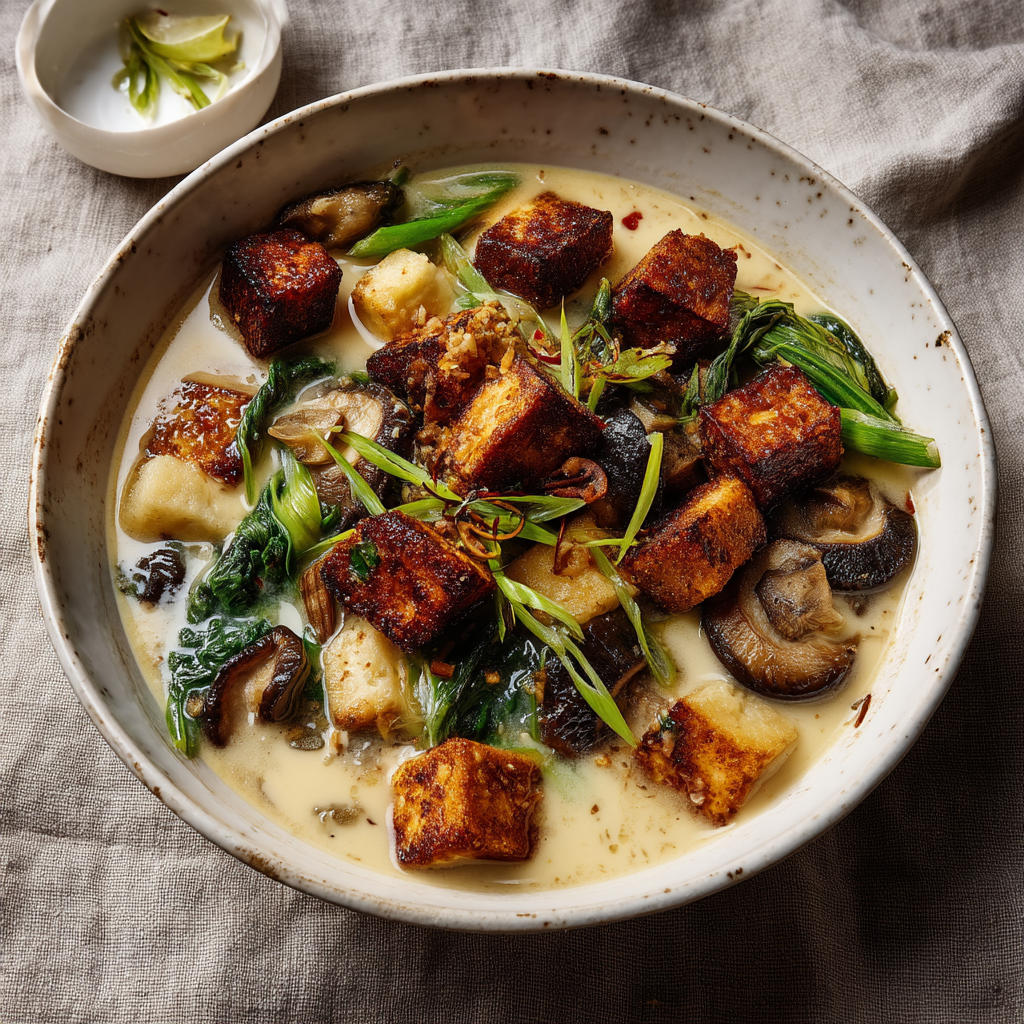
Vegetarian Kapampangan: Crispy Tofu & Mushrooms in Coconut-Guava Broth
Recipe Overview
Dish Name: Vegetarian Kapampangan Ginataang Gulay with Crispy Tofu and Mushrooms
Cuisine: Modern Kapampangan | Category: Vegetarian Course | Serves: 4
Prep Time: 15 minutes | Cook Time: 30 minutes | Total Time: 45 minutes
Why This Works
This vegetarian Kapampangan recipe solves the weeknight comfort food problem without compromising on the bold, layered flavors Central Luzon is known for. Traditional Kapampangan cooking relies on rich coconut milk and distinctive sour notes—here, fresh guava delivers that signature tang while adding natural sweetness that mellows the heat. The technique of pan-frying tofu until deeply golden before simmering creates textural contrast against silky vegetables. Shiitake mushrooms and coconut milk build serious umami depth that stands up to any meat-based version. This is the kind of one-pot meal you want after a long day: substantial, warming, and ready in under an hour with minimal cleanup.
Ingredients (Serves 4)
For the Tofu:
- 400g extra-firm tofu, pressed and cut into 2cm cubes
- 2 tbsp neutral oil (grapeseed or vegetable)
- ½ tsp fine sea salt
For the Ginataang Base:
- 2 tbsp neutral oil
- 6 cloves garlic, minced
- 1 medium white onion (150g), finely diced
- 40g fresh ginger, julienned
- 200g fresh shiitake mushrooms, stems removed, caps quartered
- 400ml full-fat coconut milk (use premium brands like Aroy-D)
- 200ml vegetable stock
- 2 medium guavas (150g total), quartered, seeds removed
- 2 Thai chilies (siling labuyo), stems on, lightly crushed
- 1 tbsp fish sauce substitute (or additional soy sauce for strict vegetarian)
- 1 tbsp soy sauce
For the Vegetables:
- 200g Asian eggplant, cut into 2cm rounds
- 150g sitaw (long beans), cut into 5cm pieces
- 100g taro or sweet potato, peeled and cut into 2cm cubes
- 100g kangkong (water spinach) or baby spinach, roughly chopped
To Finish:
- 2 tbsp calamansi juice (or 1 ½ tbsp lime juice + ½ tbsp lemon juice)
- Freshly ground black pepper
- Steamed jasmine rice for serving
Method
Mise en Place (15 minutes)
Press tofu between paper towels under a heavy pan for 10 minutes. Prep all vegetables and aromatics. Have a spider strainer or slotted spoon ready for the tofu. You need a wide, deep sauté pan or Dutch oven—3.5 to 4 liters capacity. The wide surface area matters for reducing the coconut broth to proper consistency.
Crisp the Tofu (8 minutes)
Heat 2 tbsp oil in your pan over medium-high heat until shimmering. Season tofu cubes with salt. Working in a single layer (batch if needed), fry tofu until deeply golden on all sides, about 6-8 minutes total. The goal is a crisp exterior that holds up in liquid. Transfer to a plate lined with paper towels. Wipe out the pan if any bits are burning.
Build the Aromatic Base (5 minutes)
Return the pan to medium heat with 2 tbsp fresh oil. Add garlic, onion, and ginger. Cook until onion turns translucent and garlic is fragrant but not colored, about 3 minutes. Add shiitake mushrooms. Cook until they release their liquid and start to caramelize at the edges, another 3-4 minutes. This step builds the umami foundation.
Create the Coconut Broth (3 minutes)
Pour in coconut milk and vegetable stock. Stir to combine, scraping up any browned bits from mushrooms. Add quartered guavas and crushed chilies. The guava will break down slightly and release pectin, which gives the broth body. Bring to a gentle simmer. Add fish sauce substitute and soy sauce. Stir once and let it find its simmer.
Layer the Vegetables (12 minutes)
Add taro or sweet potato first—they need the longest cooking. Simmer 5 minutes. Add eggplant rounds and long beans. Simmer another 5 minutes. The vegetables should be tender but not falling apart. Eggplant absorbs coconut milk beautifully but turns to mush if overcooked.
Final Assembly (2 minutes)
Slide the crispy tofu back into the pan. Add kangkong or spinach—it wilts in 60 seconds. Turn off heat. Squeeze in calamansi juice. Taste. The broth should hit sour, creamy, and savory all at once. Adjust with more calamansi for brightness or soy sauce for depth. Finish with several turns of black pepper.
What You Need to Know
How to make vegetarian Kapampangan food work: The sour-savory-coconut trinity is non-negotiable. Fresh guava delivers complexity that vinegar alone cannot match—it adds fruity notes and natural pectin. If guava is unavailable, use 3 tbsp tamarind paste or 2 tbsp calamansi juice added with the coconut milk, but the result will be sharper, less rounded.
Crispy tofu technique: The tofu must be pressed and fried separately. Adding raw tofu to the broth creates a completely different dish—soft, waterlogged, forgettable. The exterior crust protects the tofu and provides textural contrast against the creamy vegetables. Non-negotiable.
Make-ahead and timing: This recipe works well assembled up to the point before adding kangkong, then cooled and refrigerated. Coconut-based dishes often taste better the next day as flavors marry. Reheat gently, add fresh greens at the end, and adjust seasoning. The tofu will soften slightly but maintains pleasant texture.
The Result
The first spoonful delivers everything at once: creamy coconut cut by bright guava tang, earthy mushrooms, and that satisfying give when you bite through crispy tofu to soft center. The vegetables should have distinct textures—yielding eggplant, snappy beans, creamy taro. The broth coats a spoon without being heavy. This is comfort food that feels clean, not cloying. Serve over jasmine rice to soak up the sauce. You know you have nailed it when the sourness makes you want another bite before you have finished the first.
Nutrition Information Based on a 2,000 Calorie Diet (Per Serving)
| Nutrient | Amount | % Daily Value |
|---|---|---|
| Calories | 385 kcal | 19% |
| Total Fat | 28g | 36% |
| Saturated Fat | 18g | 90% |
| Cholesterol | 0mg | 0% |
| Sodium | 720mg | 31% |
| Total Carbohydrates | 22g | 8% |
| Dietary Fiber | 6g | 21% |
| Sugars | 8g | – |
| Protein | 14g | 28% |
| Vitamin A | 2850 IU | 57% |
| Vitamin C | 45mg | 75% |
| Calcium | 180mg | 18% |
| Iron | 4.2mg | 23% |
Flavor Balance
Sweet (4/10): Natural sweetness from coconut milk and guava. The guava contributes fruity complexity without making this a sweet dish. Onions add subtle background sweetness when properly softened.
Salty (6/10): Controlled through soy sauce and fish sauce substitute. The salinity should frame the dish without dominating—it lets the coconut and vegetables speak.
Sour (7/10): This is where Kapampangan cooking shines. Guava provides gentle, fruity acidity throughout cooking. The calamansi juice at the end adds bright, citric punch that lifts the entire dish.
Bitter (2/10): Minimal but present from kangkong and slight char on the mushrooms. Just enough to add complexity without crossing into assertive territory.
Umami (8/10): Shiitake mushrooms, soy sauce, and fish sauce substitute create deep savory foundation. The coconut milk amplifies umami perception through fat content. This is the backbone that makes the dish satisfying.
Wine Pairing
Recommended: Riesling from Clare Valley or Eden Valley, South Australia
Why: Off-dry Australian Riesling bridges this dish perfectly. The wine’s natural acidity matches the guava and calamansi sourness without competing. Residual sugar balances the chili heat and complements the coconut milk’s richness. Clare Valley Riesling brings lime and green apple notes that echo the citric elements while the wine’s minerality cuts through the fat. The slight petrol character in aged Riesling (3-5 years) adds complexity that stands up to the ginger and shiitake funk. Serve at 8-10°C.
Alternatives:
Gewürztraminer from Adelaide Hills: The varietal’s lychee and rose petal aromatics complement the Asian flavor profile. Natural spice in the wine mirrors the ginger and chili. Medium body handles the coconut milk without getting lost. The slight sweetness tames heat while the wine’s texture matches the dish’s richness.
Grüner Veltliner from Canberra District: If you want to go dry, this Austrian varietal grown in Australia’s cool climate delivers white pepper spice and citrus that aligns with the dish’s savory-bright character. Higher acidity cuts the coconut fat cleanly. The wine’s herbal notes (think green bean, not grass) echo the vegetables. Less obvious pairing but works brilliantly if you prefer crisp over fruity.
HACCP-Compliant Storage and Safety
Cooling Protocol: Cool dish to 21°C within 2 hours, then to 4°C within an additional 4 hours total. Transfer to shallow containers (5cm depth maximum) to speed cooling. Do not cover until temperature drops below 21°C to prevent condensation and bacterial growth.
Refrigeration: Store in airtight containers at 4°C or below for maximum 3 days. Coconut milk can separate during storage—this is normal. Stir thoroughly when reheating. Tofu texture will soften but remains safe and palatable.
Freezing: Not recommended. Coconut milk breaks when frozen and thawed. Tofu becomes spongy and unpleasant. Vegetables lose structural integrity. If you must freeze, consume within 1 month and expect significant texture degradation.
Reheating: Reheat to minimum internal temperature of 74°C, stirring frequently to ensure even heat distribution. Use stovetop over medium heat rather than microwave for better results. Add 2-3 tbsp water or stock if sauce has thickened excessively. Do not reheat more than once.
Disposal: Discard if refrigerated beyond 3 days, if odor turns sour or off-putting, if mold appears, or if stored above 4°C for more than 2 hours cumulative time. Coconut milk-based dishes are particularly prone to spoilage—when in doubt, throw it out.
