


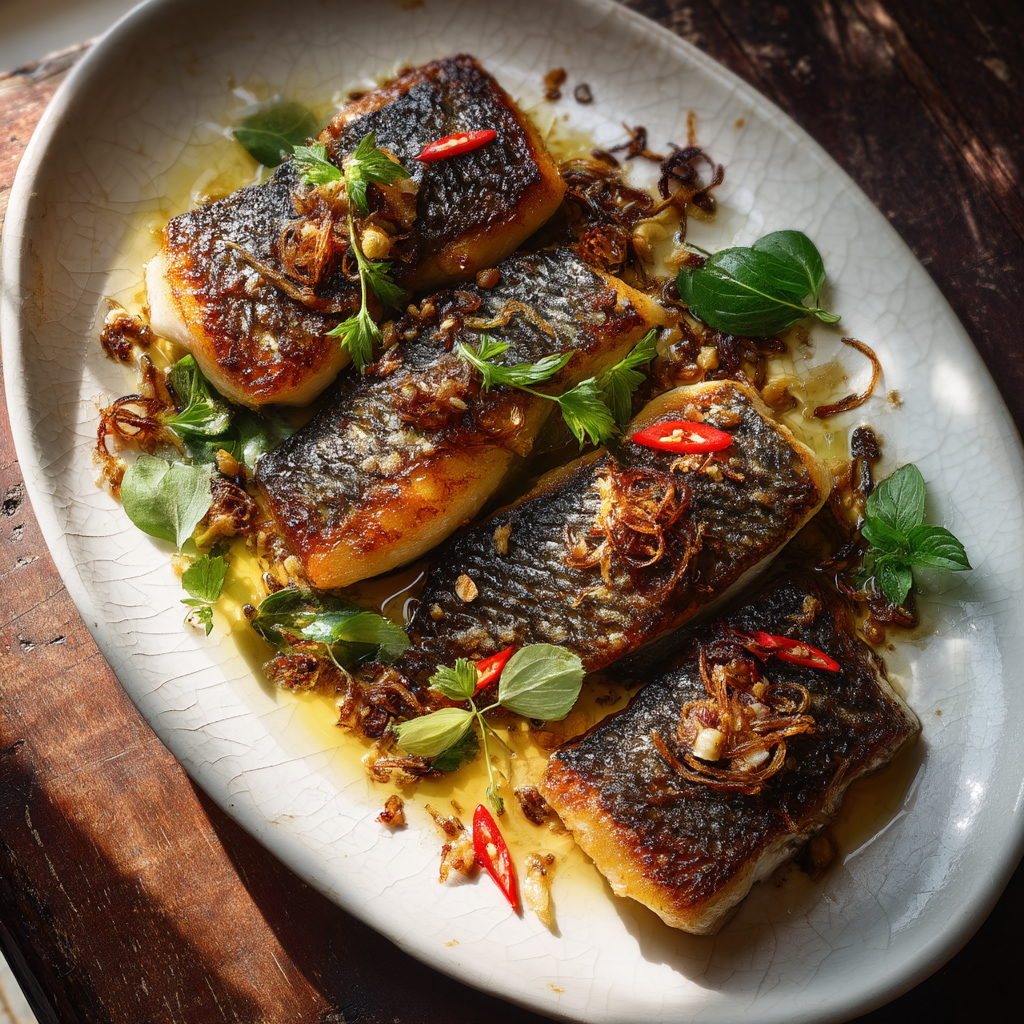
Thai Steamed Fish Dinner with Lime Leaf Oil and Crispy Lemongrass
Recipe Overview
Dish Name: Steamed Barramundi with Lime Leaf Oil and Crispy Lemongrass Cuisine: Thailand | Category: Fish Course | Serves: 4 Prep Time: 20 minutes | Cook Time: 18 minutes | Total Time: 38 minutes
Why This Works
This Thai steamed fish dinner solves the fundamental problem of steamed fish being boring. Most versions give you flavorless protein swimming in watery aromatics. This approach layers flavor in three distinct stages: a coconut-lime marinade that penetrates the flesh, an infused oil that coats every surface with kaffir lime intensity, and crispy lemongrass-shallot topping that provides textural contrast. The technique borrows from both Thai steaming traditions and Chinese oil-poaching methods, creating something that doesn’t exist in either canon. You get restaurant elegance without the anxiety, proper protein cooking without babysitting, and enough aromatic complexity to make this memorable rather than virtuous.
Ingredients (Serves 4)
For the Fish:
- 4 barramundi fillets (180g each), skin on, scaled, pin bones removed
- 60ml coconut cream (not milk, the thick stuff from the top of the can)
- 15ml fish sauce
- 5g palm sugar, grated fine
- 3g white pepper, freshly ground
For the Lime Leaf Oil:
- 100ml neutral oil (grapeseed or rice bran)
- 12 kaffir lime leaves, center vein removed, torn
- 3 garlic cloves (15g), smashed
- 20g galangal, sliced thin
- 2 bird’s eye chilies, split lengthwise
For the Crispy Aromatics:
- 60ml neutral oil
- 3 lemongrass stalks (80g), tender white part only, sliced paper-thin
- 4 shallots (80g), sliced into thin rings
- 3g sea salt
For Serving:
- 30ml lime juice (about 2 limes)
- 15g cilantro leaves, whole
- 15g Thai basil leaves, torn
- 2 red chilies, sliced thin (optional heat)
Method
Mise en Place (12 minutes)
Get your steamer setup ready. You need a wok or large pot with a steaming rack that can accommodate a heatproof plate large enough to hold four fillets without overlap. If your setup is smaller, work in two batches. Pat the fish completely dry with paper towels. Mix coconut cream, fish sauce, palm sugar, and white pepper in a shallow dish. This is your marinade base.
Marinate the Fish (8 minutes passive)
Lay the fillets skin-side down in the marinade. Flip them after 4 minutes. This brief exposure lets the marinade penetrate without cooking the fish or making it mushy. The coconut fat carries flavor compounds into the protein while the fish sauce provides glutamates that amplify the fish’s natural sweetness. Don’t go longer than 8 minutes total or the acid and salt will start to cure the flesh.
Prepare the Lime Leaf Oil (8 minutes)
Heat 100ml oil in a small saucepan over medium-low heat to 140°C. Add torn lime leaves, smashed garlic, galangal slices, and split chilies. You want gentle bubbling, not aggressive frying. Hold this temperature for 6 minutes, stirring occasionally. The aromatics will release their essential oils into the fat without burning. Remove from heat and let steep while you cook the fish. This technique extracts volatile compounds that would evaporate with direct steaming.
Fry the Crispy Aromatics (6 minutes)
In a separate pan, heat 60ml oil to 160°C over medium heat. Add sliced lemongrass and fry for 3 minutes, stirring constantly, until golden and crisp. Remove with a slotted spoon to paper towels. Add shallot rings to the same oil and fry for 2-3 minutes until mahogany brown. They’ll crisp as they cool. Drain and season everything with sea salt immediately. These provide the textural contrast that makes steamed fish interesting.
Steam the Fish (10 minutes)
Bring your steamer water to a rolling boil. Arrange the marinated fillets skin-side down on your heatproof plate. Pour any remaining marinade over them. Place the plate in the steamer, cover tightly, and steam for exactly 8 minutes for 180g fillets at room temperature. The fish is done when it flakes with gentle pressure but still has a slight translucence at the thickest part. It will continue cooking from residual heat. Timing is critical. Oversteaming gives you dry, stringy protein.
Final Assembly (2 minutes)
Remove the plate from the steamer. Strain the lime leaf oil directly over the hot fish, discarding the solids. The oil should sizzle slightly on contact. Squeeze fresh lime juice over everything. Top with crispy lemongrass and shallots, then scatter cilantro, Thai basil, and fresh chilies. The temperature contrast between hot fish, warm oil, and cool herbs creates layers of aromatic release as you eat.
What You Need to Know
The steaming time of 8 minutes is calibrated for 180g fillets starting at room temperature. If your fish is cold from the fridge, add 2 minutes. If your fillets are thicker than 3cm, add 1-2 minutes. The flesh should reach 60°C internal temperature for proper texture. Use an instant-read thermometer if you’re uncertain.
The lime leaf oil can be made 2 hours ahead and held at room temperature. Don’t refrigerate it or the aromatics will turn bitter. Strain it just before serving so the hot oil activates the fish’s surface proteins and creates that restaurant-quality gloss.
Barramundi works perfectly here because of its firm texture and mild flavor, but you can substitute snapper, grouper, or sea bass. Avoid delicate fish like sole or flounder as they’ll fall apart. The skin protects the flesh during steaming and provides fat for the oil to cling to.
The Result
You get fish with three distinct flavor experiences. The flesh itself is subtly sweet from coconut and aromatic from the marinade. The lime leaf oil provides intense citrus punch and herbal complexity. The crispy aromatics add crunch and savory depth. The texture is silky and just-cooked, never mealy or dry. The plate looks elegant without fussy arrangement. Each bite should give you tender fish, aromatic oil, and crispy texture in one mouthful. If you’ve nailed it, the fish will flake cleanly but still hold together, and the oil will coat your lips with lime leaf intensity.
Nutrition Information Based on a 2,000 Calorie Diet (Per Serving)
| Nutrient | Amount | % Daily Value |
|---|---|---|
| Calories | 420 kcal | 21% |
| Total Fat | 28g | 36% |
| Saturated Fat | 6g | 30% |
| Trans Fat | 0g | 0% |
| Cholesterol | 95mg | 32% |
| Sodium | 580mg | 25% |
| Total Carbohydrates | 8g | 3% |
| Dietary Fiber | 1g | 4% |
| Total Sugars | 3g | – |
| Protein | 38g | 76% |
| Vitamin D | 12mcg | 60% |
| Calcium | 85mg | 7% |
| Iron | 1.8mg | 10% |
| Potassium | 620mg | 13% |
Flavor Balance
Sweet (4/10): Palm sugar and coconut cream provide gentle background sweetness that balances the aromatics without pushing into dessert territory. The shallots contribute natural sugars when fried.
Salty (6/10): Fish sauce in the marinade and sea salt on the crispy aromatics create the savory foundation. The salt level is deliberately restrained to let the fish’s natural sweetness shine.
Sour (7/10): Fresh lime juice at service provides bright acidity that cuts through the rich oil and lifts the entire dish. Kaffir lime leaves contribute citric aromatic compounds without adding liquid acid.
Bitter (3/10): Subtle bitterness from charred lemongrass edges and galangal adds complexity without dominating. Thai basil contributes minor bitter notes that enhance rather than compete.
Umami (8/10): The fish itself, amplified by fish sauce glutamates and the Maillard reactions in the fried aromatics, creates deep savory satisfaction. This is the dominant flavor dimension that makes the dish feel complete.
Wine Pairing
1. Technical Match
Weight: This is a medium-bodied dish despite being steamed fish. The coconut cream, infused oil, and fried aromatics add substantial richness that needs a wine with presence. Light wines will disappear; full-bodied wines will overwhelm the delicate fish. Medium weight is non-negotiable.
Acid Balance: The dish registers high acidity from lime juice and kaffir lime aromatics. You need a wine with matching or higher acidity to avoid the wine tasting flabby. Low-acid wines will taste sweet and cloying against this food. Aim for wines with 6-7g/L titratable acidity minimum.
Tannin Interaction: The fish has minimal fat compared to red meat, and the coconut cream provides some richness but not enough to buffer aggressive tannins. Avoid tannic wines entirely. If serving red, it must be light-bodied with soft, resolved tannins. White wines with no oak or minimal oak work best.
Serving Temperature: Serve whites at 10-12°C. Too cold and you’ll mute the aromatic complexity that mirrors the dish’s lime leaf and lemongrass notes. Too warm and the wine’s acid will taste harsh against the delicate fish.
2. Flavor Architecture
Primary Bridge: Citrus aromatics. The kaffir lime oil and fresh lime juice create intense citrus character that needs matching citrus notes in the wine. Look for wines with lemon-lime profiles, not tropical fruit.
Complementary Elements: The coconut cream’s richness and the fried aromatics’ savory depth need wines with texture and weight, not just acid. Wines with some lees contact or slight viscosity will complement rather than contrast. The herbal notes from basil and cilantro pair beautifully with herbaceous wine characteristics.
Regional Logic: Thai cuisine traditionally pairs with off-dry Riesling or Gewürztraminer, but this dish is less sweet and more complex than typical Thai food. The steaming technique and oil-based sauce suggest treatment more aligned with Southern Chinese preparations, where crisp whites with mineral character dominate.
Common Mistakes: Avoid oaked Chardonnay (the vanilla will clash with lime leaf), sweet wines (they’ll fight the savory fish sauce), and anything over 13.5% alcohol (the heat will amplify the chilies uncomfortably).
3. Recommendations with Scoring
Primary Pairing: Eden Valley Riesling
Intensity Match: 9/10 Flavor Harmony: 9/10 Texture Interaction: 8/10
Why: Eden Valley Riesling delivers the exact citrus-acid profile this dish demands. The lime peel and lemon zest aromatics mirror the kaffir lime oil perfectly. The wine’s razor-sharp acidity cuts through coconut richness while its subtle petrol notes (from bottle age if you can find 3-5 year old examples) add complexity that matches the dish’s aromatic layers. The slight phenolic grip from skin contact (in some producers’ styles) provides textural interest without actual tannin. Dry styles work better than off-dry here because the dish already has palm sugar sweetness.
Specific Producers: Pewsey Vale, Henschke Julius, Mount Horrocks
Alternative 1: Clare Valley Riesling
Intensity Match: 8/10 Flavor Harmony: 9/10 Texture Interaction: 8/10
Why: Clare Valley Rieslings are slightly riper and rounder than Eden Valley, with more citrus flesh character and less floral lift. This works beautifully with the dish’s coconut cream richness. The higher natural alcohol (often 12.5-13%) provides weight that matches the oil component. Clare Rieslings often show distinct lime character that’s almost identical to fresh lime juice. The mineral backbone from slate and limestone soils adds a savory element that complements fish sauce umami.
Specific Producers: Grosset Polish Hill, Jim Barry The Lodge Hill, Kilikanoon Mort’s Block
Alternative 2: Margaret River Semillon-Sauvignon Blanc Blend
Intensity Match: 7/10 Flavor Harmony: 8/10 Texture Interaction: 9/10
Why: This blend offers a different approach: Sauvignon provides the herbaceous character that mirrors cilantro and Thai basil, while Semillon adds weight and texture that matches the oil-coated fish. The Sauvignon’s grassy, lemongrass-like aromatics create an almost eerie flavor bridge to the crispy lemongrass garnish. Margaret River expressions tend toward restrained ripeness rather than aggressive tropical fruit, keeping them food-friendly. Look for blends that are 60-70% Semillon for proper weight. Avoid heavily oaked versions.
Specific Producers: Vasse Felix, Woodlands, Cape Mentelle
HACCP-Compliant Storage and Safety
Initial Cooling
- Cool leftover fish to 21°C within 2 hours, then to 4°C within an additional 4 hours maximum
- Divide into shallow containers (5cm depth maximum) for faster cooling
- Do not cover while hot; allow steam to escape until fish reaches 60°C, then cover loosely
Refrigeration Guidelines
- Store cooked fish in airtight containers at 2-4°C maximum
- Maximum holding time: 24 hours for optimal quality and safety
- Store crispy aromatics separately in airtight container at room temperature for up to 12 hours
- Lime leaf oil can be refrigerated separately for up to 3 days; bring to room temperature before use
Freezing Guidelines
- Not recommended for this preparation due to textural degradation of steamed fish and loss of aromatic oils
- If necessary, freeze cooked fish only (without oil or garnishes) at -18°C for maximum 1 month
- Defrost in refrigerator overnight; do not refreeze
Reheating Procedures
- Reheat fish to minimum internal temperature of 75°C
- Use steaming method for 4-5 minutes rather than microwave to preserve texture
- Prepare fresh lime leaf oil and crispy aromatics rather than reheating original components
- Discard any fish held at room temperature for more than 2 hours
Raw Fish Handling
- Store raw fish at 0-2°C and use within 24 hours of purchase
- Keep raw fish separate from ready-to-eat foods at all times
- Wash hands, cutting boards, and utensils with hot soapy water after contact with raw fish
- Cook fish to minimum internal temperature of 60°C for proper food safety
Disposal Guidance
- Discard cooked fish after 24 hours refrigerated storage regardless of appearance
- Discard any fish with off-odors, slimy texture, or discoloration
- Discard fish left at room temperature for more than 2 hours (1 hour if ambient temperature exceeds 32°C)
