


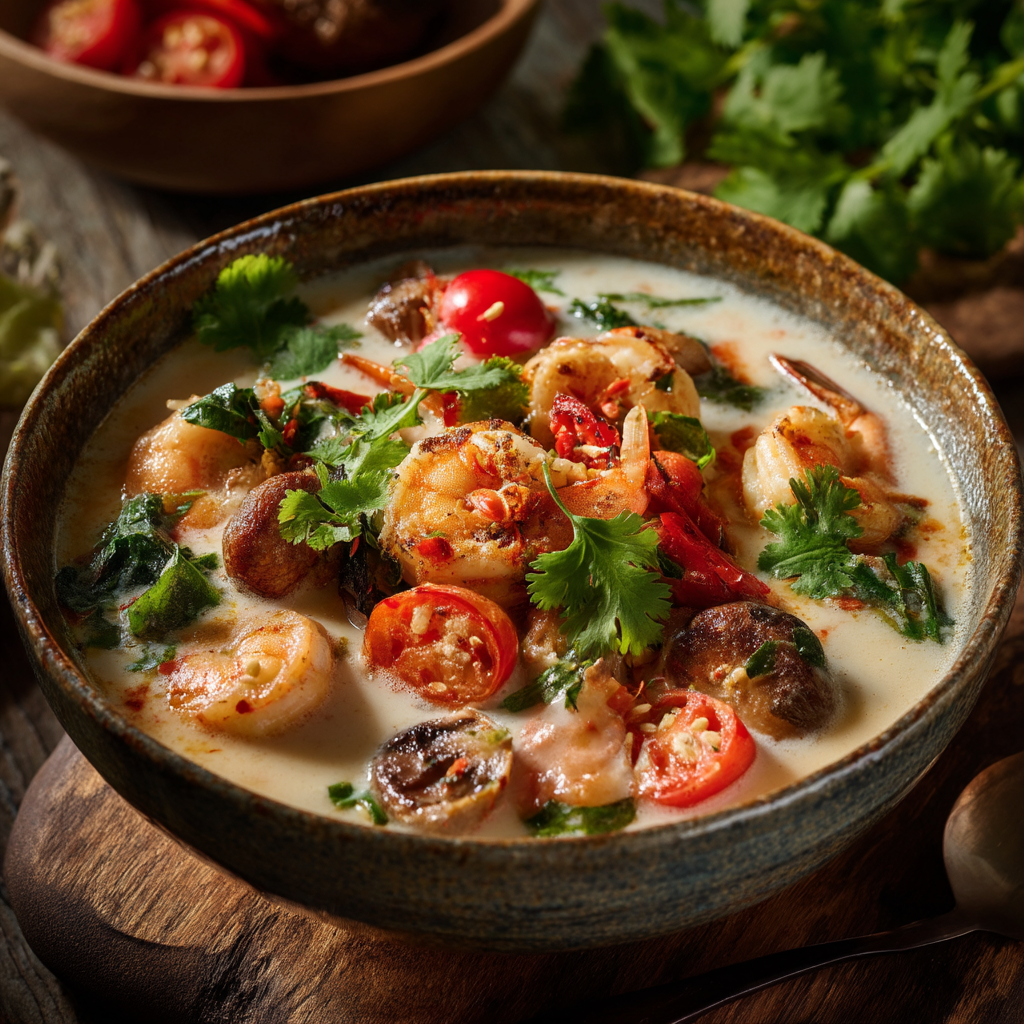
Thai Coconut Soup with Chicken and Shrimp, Lemongrass-Ginger Broth
Recipe Overview
Dish Name: Thai Coconut Soup with Chicken and Shrimp, Lemongrass-Ginger Broth
Cuisine: Thai | Category: Soup | Serves: 4
Prep Time: 12 minutes | Cook Time: 18 minutes | Total Time: 30 minutes
Why This Works
This Thai coconut soup delivers restaurant-quality depth in 30 minutes by building aromatics in two stages. First, you create a concentrated paste base with lemongrass, galangal, and shallots. Then you finish with fresh aromatics that stay bright and pronounced. The result sits between Tom Yum’s aggressive heat and Tom Kha Gai’s gentle creaminess – comfort without heaviness, complexity without fuss. The dual protein approach (chicken and shrimp) gives you textural variety and makes this a complete meal. Perfect for rainy days when you want something warming that doesn’t require standing over the stove for an hour.
Ingredients (Serves 4)
For the Aromatic Paste:
- 2 stalks lemongrass, bottom third only, outer layers removed, roughly chopped
- 30g fresh galangal (or ginger if unavailable), peeled and sliced
- 2 shallots, roughly chopped
- 3 cloves garlic
- 15ml neutral oil
For the Soup Base:
- 750ml chicken stock, preferably homemade
- 400ml coconut milk (full-fat, good quality brand)
- 3 makrut lime leaves, torn
- 2 Thai bird chilies, lightly crushed
- 15ml fish sauce
- 10g palm sugar (or light brown sugar)
For the Proteins and Vegetables:
- 250g boneless chicken thighs, cut into 2cm pieces
- 200g medium shrimp, peeled and deveined
- 200g oyster mushrooms, torn into bite-sized pieces
- 100g cherry tomatoes, halved
For Finishing:
- 45ml fresh lime juice (about 2 limes)
- Fresh coriander leaves
- Sliced red chilies (optional)
- Thinly sliced spring onions
Method
Mise en Place (12 minutes)
Prep all aromatics before you start cooking. Chop lemongrass, galangal, shallots, and garlic. Cut chicken into uniform 2cm pieces so they cook evenly. Devein shrimp if needed. Tear mushrooms by hand rather than cutting – irregular surfaces catch more broth. Have your lime juice ready in a small bowl. This soup moves fast once you start.
You need: mortar and pestle (or food processor), large soup pot, ladle, sharp knife.
Build the Aromatic Paste (4 minutes)
Pound lemongrass, galangal, shallots, and garlic in a mortar until you get a rough paste. Some texture is fine – you’re releasing oils, not making baby food. If using a food processor, pulse in short bursts with a splash of oil to prevent it from flying around. This paste forms your flavor foundation. The physical breakdown releases volatile compounds that infuse the broth more thoroughly than whole pieces ever could.
Bloom the Paste (2 minutes)
Heat oil in your soup pot over medium heat. Add the aromatic paste and cook, stirring constantly, until fragrant and the raw garlic smell disappears. The paste should sizzle gently but not burn. You’ll know it’s ready when the kitchen smells aggressively aromatic and the paste has darkened slightly. This step is critical – undercooked paste tastes harsh, overcooked tastes bitter.
Build the Broth (3 minutes)
Pour in chicken stock and bring to a simmer. Add coconut milk, torn lime leaves, and crushed chilies. Stir to combine. Season with fish sauce and palm sugar. The broth should taste slightly too salty and sweet at this point – the proteins and vegetables will balance it out. Bring to a gentle simmer, not a rolling boil. Boiling splits the coconut milk and makes the broth grainy.
Cook the Chicken (4 minutes)
Add chicken pieces to the simmering broth. Maintain a gentle simmer and cook until the chicken is just done – about 4 minutes. Chicken thighs are forgiving, but overcooking still makes them dry. Test one piece by cutting it open. No pink inside, but still juicy. The residual heat will continue cooking after you turn off the flame.
Add Mushrooms and Tomatoes (2 minutes)
Add mushrooms and tomatoes. Cook for 2 minutes. Mushrooms release liquid and absorb the coconut broth simultaneously. Tomatoes soften but shouldn’t collapse completely. They add acidity and visual contrast.
Finish with Shrimp (2 minutes)
Add shrimp and cook until they just turn pink and curl – about 90 seconds to 2 minutes depending on size. Shrimp go from perfect to rubbery in seconds. Remove from heat immediately when they’re done.
Final Seasoning (1 minute)
Remove from heat. Stir in lime juice. Taste and adjust – you want salty, sweet, sour, and aromatic in balance. Add more fish sauce for salt, more sugar for sweetness, more lime for brightness. This is your last chance to get it right.
Serve
Ladle into bowls. Garnish with coriander, spring onions, and fresh chilies. Serve immediately. The broth should be creamy but not heavy, with distinct layers of flavor rather than a muddled coconut taste.
What You Need to Know
How do I make Thai coconut soup without galangal? Use fresh ginger. The flavor profile shifts slightly – ginger is sharper and more peppery where galangal is more piney and medicinal – but the soup still works. Use the same amount.
Can I make this ahead? Cook the broth base completely, then cool and refrigerate. Reheat and add proteins fresh. Shrimp especially suffer when reheated. The aromatics will mellow overnight, which some people prefer.
What if my coconut milk splits? You overheated it. Keep the soup at a bare simmer, never a boil. If it splits, an immersion blender can re-emulsify it, but the texture won’t be as silky. Prevention is better than correction.
The Result
You get a bowl of soup with distinct layers: the first sip hits with bright lime and aromatic lemongrass, then the creamy coconut richness settles in, followed by the savory umami depth from fish sauce. The chicken should be tender, shrimp firm but yielding, mushrooms silky. The broth should coat a spoon lightly but not be thick. Visual contrast comes from white coconut broth, pink shrimp, green herbs, and red chilies. The first bite should make you want to close your eyes and take another.
Nutrition Information Based on a 2,000 Calorie Diet (Per Serving)
| Nutrient | Amount | % Daily Value |
|---|---|---|
| Calories | 385 kcal | 19% |
| Total Fat | 24g | 31% |
| Saturated Fat | 16g | 80% |
| Cholesterol | 145mg | 48% |
| Sodium | 890mg | 39% |
| Total Carbohydrates | 15g | 5% |
| Dietary Fiber | 2g | 7% |
| Sugars | 8g | – |
| Protein | 28g | 56% |
| Vitamin A | 245 IU | 5% |
| Vitamin C | 18mg | 20% |
| Calcium | 65mg | 5% |
| Iron | 3.2mg | 18% |
Flavor Balance
Sweet (4/10): Palm sugar and coconut milk provide gentle sweetness that rounds out the soup without making it dessert-like. The sweetness acts as a buffer for the lime’s acidity and fish sauce’s salt.
Salty (6/10): Fish sauce drives the savory backbone. It’s not just salt – it’s fermented umami that makes everything taste more like itself. The chicken stock adds secondary saltiness.
Sour (5/10): Fresh lime juice added at the end keeps the brightness sharp and clear. Unlike lemon, lime has a floral quality that works with lemongrass rather than fighting it.
Bitter (2/10): Minimal bitterness from torn lime leaves and lemongrass provides aromatic complexity without dominating. The slight bitterness from mushrooms adds earthiness.
Umami (7/10): Fish sauce, chicken stock, shrimp shells (if you kept them for stock), and mushrooms layer savory depth. This is what makes you want a second bowl.
Wine Pairing
Recommended: Australian Riesling, Clare Valley or Eden Valley
Why: Off-dry Riesling from these regions has the structural backbone to handle coconut richness while the residual sugar plays beautifully with Thai aromatic spices. Clare Valley Riesling brings lime-forward acidity that mirrors the soup’s citrus notes without competing. The wine’s slight petrol character (sounds bad, tastes amazing) complements galangal’s medicinal edge. Eden Valley versions add white flower aromatics that echo lemongrass. The combination of acid and subtle sweetness cuts through coconut fat while the wine’s body stands up to the dual proteins. Temperature matters – serve at 8-10°C, not ice cold. You want the aromatics to express themselves.
Alternatives:
Australian Gewürztraminer, Adelaide Hills: Lychee and rose petal notes in Gewürz mirror Thai aromatics. The slight spice character handles chilies better than most whites. Fuller body than Riesling means it won’t get lost. The tropical fruit profile complements coconut milk. Works especially well if you’ve gone heavier on the chilies.
Australian Pinot Gris, Mornington Peninsula or Yarra Valley: Textural richness from skin contact matches the soup’s body. Stone fruit and subtle spice work with ginger and galangal. Less aromatic than the first two options but more food-friendly if you’re serving this as part of a larger meal. The slight phenolic grip cuts through coconut fat effectively.
HACCP-Compliant Storage and Safety
Cooling Procedures: Cool soup to 21°C within 2 hours, then to 4°C within the next 4 hours. Transfer to shallow containers (no more than 10cm deep) to speed cooling. Do not cover until temperature drops below 21°C. An ice bath speeds this process.
Refrigeration: Store in airtight containers at 0-4°C for maximum 3 days. Chicken and seafood mixed soups have shorter holding times than single-protein soups. Label with preparation date.
Freezing: Not recommended. Coconut milk separates when frozen and reheated, shrimp becomes rubbery, and the fresh aromatic quality degrades significantly. If you must freeze, do so without the proteins and add them fresh when reheating.
Reheating: Heat to minimum 74°C throughout, measured with a probe thermometer. Do not reheat more than once. Add fresh shrimp rather than reheating the original batch. Bring to a gentle simmer, not a boil, to prevent coconut milk from splitting.
Disposal: Discard any soup held at room temperature for more than 2 hours, or refrigerated soup after 3 days. When in doubt, throw it out. Seafood soups are high-risk foods.
