


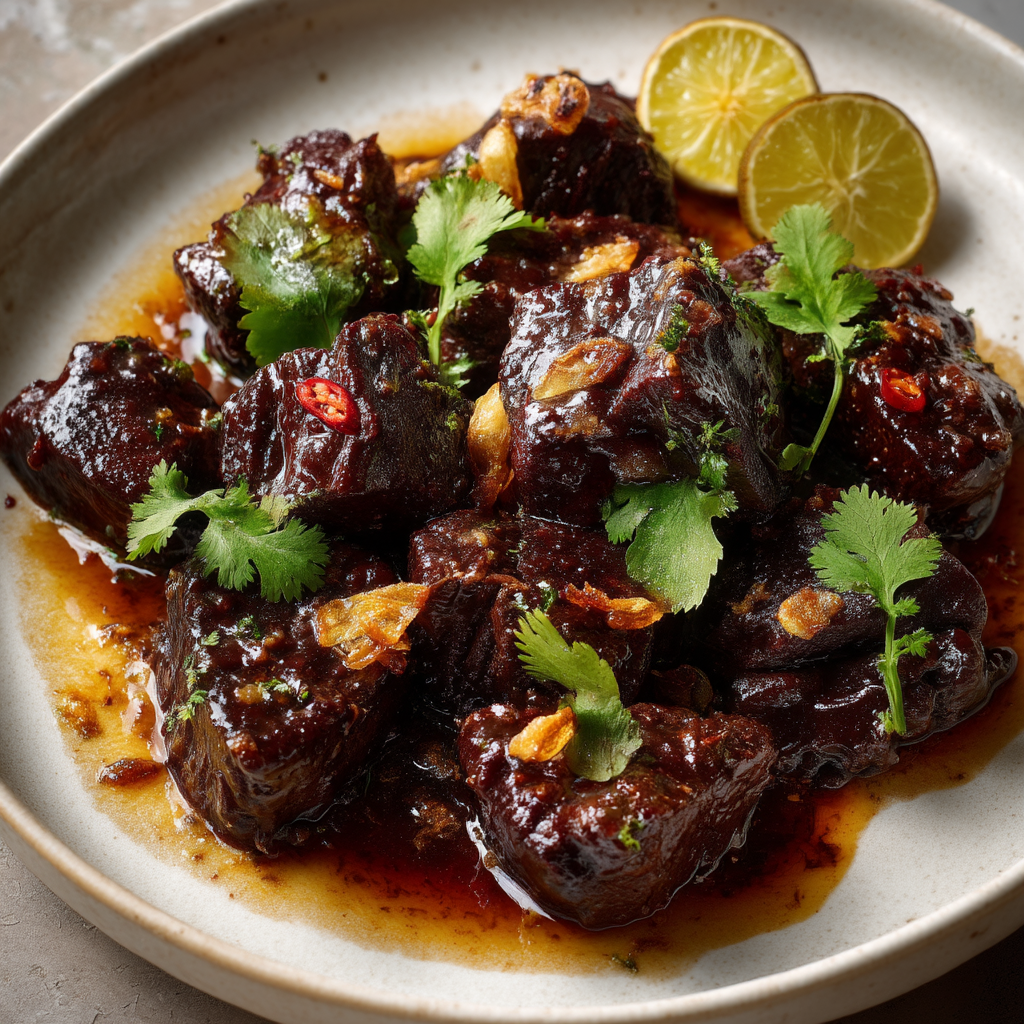
Mindanao Beef Recipe: Charred Coconut Braise with Wild Ginger
Recipe Overview
Dish Name: Mindanao Beef Rendang with Charred Coconut and Wild Ginger Cuisine: Mindanao | Category: Meat Course | Serves: 4 Prep Time: 30 minutes | Cook Time: 2 hours 45 minutes | Total Time: 3 hours 15 minutes
Why This Works
This Mindanao beef recipe solves the problem of what to serve at Eid or festive gatherings when you want something authentically Southern Filipino but not the same tired dishes everyone else brings. We’re taking the slow-braising tradition of Mindanao cooking and applying it to beef chuck with native ingredients that matter: fresh turmeric, wild ginger (luya dilaw), and young coconut that gets charred before grinding. The charring step adds a smoky depth that balances the richness without needing pork-based flavor bombs. The result is halal-compliant, feeds four generously, and actually tastes like it comes from Mindanao rather than generic “Filipino food.” You’ll get fall-apart tender beef in a concentrated, almost dry sauce that clings to every piece.
Ingredients (Serves 4)
For the Spice Paste:
- 8 shallots (120g), peeled and roughly chopped
- 6 cloves garlic (30g), peeled
- 40g fresh turmeric root, peeled and chopped
- 30g wild ginger (luya dilaw) or regular ginger, peeled
- 3 stalks lemongrass, bottom third only, sliced thin
- 4 Thai bird chilies, stems removed
- 2 tablespoons coriander seeds, toasted
- 1 tablespoon cumin seeds, toasted
- 60ml water for blending
For the Charred Coconut:
- 150g fresh young coconut meat (not dried)
- 100g fresh coconut, mature flesh, cut into 2cm pieces
For the Braise:
- 1kg beef chuck, cut into 5cm chunks, against the grain
- 400ml coconut cream (first press, thick)
- 200ml coconut milk (second press, thinner)
- 4 kaffir lime leaves, center vein removed
- 2 pieces dried tamarind slab (30g total) or 2 tablespoons tamarind paste
- 40g palm sugar, grated
- 2 teaspoons sea salt, plus more to taste
- 80ml patis (fish sauce)
- 3 tablespoons coconut oil
For Finishing:
- 20g cilantro leaves, roughly chopped
- 2 calamansi, halved (or 1 regular lime)
- Fried shallots for garnish
Method
Mise en Place (30 minutes)
Get your mortar and pestle or food processor ready. Toast the coriander and cumin seeds in a dry pan until fragrant, about 2 minutes. Set up a gas burner or prepare your broiler for charring coconut. Have a heavy-bottomed Dutch oven or wide braising pan ready. Cut all ingredients as specified. If using tamarind slab, soak it in 100ml hot water for 15 minutes, then mash and strain out seeds.
Char the Coconut (8 minutes)
Heat a cast iron skillet over high heat until smoking. Add the mature coconut pieces in a single layer. Let them char without moving for 3 minutes until blackened on one side. Flip and char another 2 minutes. You want genuine carbon on these pieces. Remove and let cool. Combine charred coconut and young coconut meat in a food processor. Pulse until you get a coarse paste with visible char flecks throughout. This charred coconut paste is your umami foundation and what separates this from standard rendang.
Build the Spice Paste (12 minutes)
Combine shallots, garlic, turmeric, ginger, lemongrass, chilies, toasted coriander, and cumin in your food processor with the 60ml water. Blend to a smooth paste, stopping to scrape down sides twice. The paste should be cohesive, not watery. This is your flavor base and it needs to be completely smooth or you’ll get grainy sauce later.
Bloom the Paste (15 minutes)
Heat coconut oil in your Dutch oven over medium heat. Add the spice paste and cook, stirring constantly, until the raw smell disappears and the paste darkens two shades, about 12 minutes. You’ll see oil separating at the edges. This blooming step is non-negotiable. Undercooked paste tastes medicinal; properly bloomed paste tastes complex and slightly sweet. Add the charred coconut paste and fry together for another 3 minutes.
Sear and Build the Braise (20 minutes)
Pat beef chunks completely dry with paper towels. Push the paste to the sides of the pot, increase heat to medium-high, and sear beef in batches in the center where oil has pooled. Get actual color on the meat, 2 minutes per side. Don’t crowd the pan. Once all beef is seared, return everything to the pot. Add coconut cream, coconut milk, kaffir lime leaves, tamarind mixture, palm sugar, salt, and patis. Stir to combine. Bring to a vigorous simmer.
The Long Braise (2 hours)
Reduce heat to low. You want gentle bubbling, not rolling boil. Partially cover the pot, leaving a 2cm gap for steam to escape. Stir every 20 minutes to prevent sticking. After the first hour, the liquid will have reduced by half. After 90 minutes, remove the lid completely. The sauce will continue reducing and concentrating. By 2 hours, the sauce should coat the back of a spoon and the beef should be fork-tender. If sauce is still thin at 2 hours, increase heat to medium and reduce uncovered for another 15 minutes, stirring constantly.
Final Adjustments (5 minutes)
Taste the sauce. It should hit salty, sweet, sour, and umami hard with lingering heat. Adjust with more palm sugar if too sour, more tamarind if too sweet, more patis if flat. The sauce should be thick enough to cling to the beef without pooling. If beef is tender but sauce is too thick, add coconut milk 2 tablespoons at a time. If sauce is perfect but beef needs more time, add a splash of water and continue cooking.
Rest and Serve (10 minutes)
Remove from heat and let rest 10 minutes. The sauce will thicken further as it cools slightly. Transfer to a serving platter. Garnish with cilantro and fried shallots. Serve calamansi halves on the side for squeezing over individual portions. This dish is better after 24 hours when flavors marry, but it’s also excellent fresh.
What You Need to Know
The charred coconut technique is what makes this dish Mindanao-specific rather than generic Southeast Asian beef stew. Don’t skip the charring or substitute with coconut powder. You need the actual carbon and the texture contrast between young and mature coconut. The long, slow reduction creates a concentrated sauce that’s almost dry. This isn’t soup. If you end up with liquid pooling around the beef, you haven’t reduced enough. The spice paste must be completely smooth before cooking or you’ll have a grainy sauce. A high-powered blender works better than a food processor for this. Make-ahead works perfectly: this dish improves over 2-3 days in the refrigerator as flavors deepen. Reheat gently with a splash of coconut milk to loosen.
The Result
You get beef so tender it barely holds its shape when you pick it up with a fork, coated in a dark, concentrated sauce that’s simultaneously rich and bright. The first bite delivers coconut cream richness immediately followed by the heat from chilies and the sourness from tamarind. The charred coconut adds a subtle smokiness that lingers. The sauce should be thick enough that it doesn’t run on the plate. Each piece of beef is thoroughly seasoned throughout, not just on the surface. The texture is yielding but not mushy. The flavor balance is aggressive: this is celebration food, not everyday eating. When plated, the sauce should have a slight sheen from the coconut oil, and you should see flecks of the charred coconut throughout.
Nutrition Information Based on a 2,000 Calorie Diet (Per Serving)
| Nutrient | Amount | % Daily Value |
|---|---|---|
| Calories | 642 kcal | 32% |
| Total Fat | 46g | 59% |
| Saturated Fat | 32g | 160% |
| Cholesterol | 118mg | 39% |
| Sodium | 1,840mg | 80% |
| Total Carbohydrates | 24g | 9% |
| Dietary Fiber | 3g | 11% |
| Sugars | 14g | – |
| Protein | 38g | 76% |
| Vitamin A | 8% | – |
| Vitamin C | 18% | – |
| Calcium | 6% | – |
| Iron | 28% | – |
Flavor Balance
Sweet (6/10): Palm sugar and coconut cream provide the primary sweetness, balanced by the natural sugars in shallots and young coconut. The sweetness is present but restrained, supporting rather than dominating.
Salty (7/10): Patis delivers the primary salinity along with sea salt. The saltiness is forward but not aggressive, necessary to balance the richness of coconut and beef fat.
Sour (6/10): Tamarind provides sharp acidity that cuts through the coconut cream. Kaffir lime leaves add aromatic sourness. Calamansi at service lets diners adjust acidity to preference.
Bitter (3/10): Charred coconut contributes subtle bitterness without overwhelming. Turmeric and toasted spices add background bitter notes that provide complexity.
Umami (9/10): Beef chuck, patis, charred coconut, and the long reduction create intense savory depth. The Maillard reaction during searing and paste blooming compounds the umami foundation. This is an umami-forward dish.
Wine Pairing
1. Technical Match
Weight: This is a full-bodied, rich dish with significant fat from coconut cream and marbled beef chuck. You need a wine with equivalent weight and structure to stand up to the intensity without being flattened. Medium-bodied wines will disappear entirely.
Acid Balance: The dish has moderate-high acidity from tamarind and lime leaves. Wine needs matching or higher acidity to refresh the palate between bites and cut through coconut fat. Low-acid wines will taste flabby and cloying against this sauce.
Tannin Interaction: High protein and fat content in beef can soften tannins beautifully. However, the coconut cream’s richness means you want restrained, fine-grained tannins rather than aggressive, drying tannins. The spice heat also amplifies tannin perception, so moderation is critical.
Serving Temperature: Serve reds at 16-18°C. Too warm and the alcohol will amplify the chili heat uncomfortably. Too cold and you’ll lose aromatic complexity needed to bridge with the spice paste.
2. Flavor Architecture
Primary Bridge: The charred coconut and beef’s Maillard browning create roasted, caramelized notes that mirror oak-aged wine characteristics. Toasted spices (coriander, cumin) echo similar toast and spice notes in barrel-aged wines.
Complementary Elements: The dish’s heat and intensity need either fruit sweetness to contrast or savory depth to complement. Coconut cream’s texture benefits from wine acidity creating a cleansing effect. Palm sugar’s caramel notes pair with wine’s glycerol richness.
Regional Logic: While this is Mindanao cuisine, the braising technique and spice complexity mirror slow-cooked dishes globally that pair well with medium-to-full reds or aromatic off-dry whites.
Common Mistakes: Avoid high-alcohol wines (above 14.5%) which amplify heat painfully. Skip oaky Chardonnay which clashes with fish sauce. New World Cabernet is too tannic and will taste astringent with the spice. Pinot Noir is too delicate and gets buried.
3. Recommendations with Scoring
Primary Pairing: Australian Grenache-Shiraz Blend (Barossa Valley or McLaren Vale)
- Intensity Match: 9/10
- Flavor Harmony: 9/10
- Texture Interaction: 8/10
Why: Grenache brings red fruit sweetness and soft tannins that complement rather than fight the spice heat. Shiraz adds black pepper notes that echo the dish’s peppery complexity and provides structural weight to match the beef. The blend’s typical 14-14.5% alcohol is high enough for richness but not so high it burns with chili heat. Fruit-forward character with restrained oak means the wine won’t clash with fish sauce or tamarind. The wine’s natural glycerol and ripe fruit provide a cooling contrast to heat while the spice notes harmonize with cumin and coriander.
Specific Producers: Yangarra Estate Grenache, Turkey Flat Shiraz-Grenache, d’Arenberg The Custodian
Alternative 1: Australian Riesling (Clare Valley or Eden Valley, Off-Dry)
- Intensity Match: 7/10
- Flavor Harmony: 8/10
- Texture Interaction: 9/10
Why: Off-dry Riesling’s residual sugar (8-12g/L) provides direct heat relief while high acidity cuts through coconut cream like a knife. The wine’s citrus and stone fruit notes bridge with calamansi and tamarind. Riesling’s aromatic intensity can stand up to the complex spice paste without being overwhelmed. The lighter body seems counterintuitive, but the sugar-acid balance and aromatic complexity make it work. This is the safer choice for guests sensitive to tannin or alcohol with spicy food.
Specific Producers: Grosset Polish Hill Riesling, Pewsey Vale Eden Valley Riesling, Mount Horrocks Cordon Cut
Alternative 2: Australian Tempranillo (Various Regions)
- Intensity Match: 8/10
- Flavor Harmony: 7/10
- Texture Interaction: 8/10
Why: Tempranillo’s savory leather and tobacco notes complement the dish’s umami depth from charred coconut and fish sauce. Moderate tannins (softer than Cabernet) won’t clash with spice heat. The wine’s earthy complexity mirrors turmeric and ginger’s earthiness. Tempranillo’s typical moderate alcohol (13.5-14%) won’t amplify heat uncomfortably. The wine’s acidity is sufficient to refresh against coconut richness. This pairing emphasizes savory harmony over fruit contrast.
Specific Producers: Delinquente Wine Co. Tinto, Alpha Box & Dice Tarot Tempranillo, Coriole Redstone Tempranillo
HACCP-Compliant Storage and Safety
Cooling Procedures
- Cool beef rendang from 60°C to 21°C within 2 hours by transferring to shallow containers (5cm depth maximum)
- Refrigerate uncovered initially to release steam, then cover once cooled to 21°C
- Reach 4°C or below within additional 4 hours (total 6-hour cooling window from cooking completion)
Refrigeration Guidelines
- Store in airtight containers at 0-4°C
- Maximum holding time: 4 days from cooking date
- Label containers with preparation date and contents
- Store on shelves below raw ingredients to prevent cross-contamination
Freezing Guidelines
- Freeze in portion-sized airtight containers or vacuum-sealed bags
- Freeze at -18°C or below within 24 hours of cooking
- Maximum frozen storage: 3 months for optimal quality
- Label with freeze date and reheating instructions
Reheating Procedures
- Reheat to internal temperature of 75°C throughout, holding for minimum 2 minutes
- Stir thoroughly during reheating to ensure even heat distribution
- If reheating from frozen, thaw in refrigerator for 24 hours before reheating (never at room temperature)
- Reheat only once; do not re-refrigerate reheated portions
Disposal Guidance
- Discard if stored longer than maximum holding times listed above
- Discard if temperature has exceeded 4°C for more than 2 cumulative hours during storage
- Discard if any off-odors, discoloration, or mold are present
- Discard reheated portions not consumed within 2 hours of reheating
