


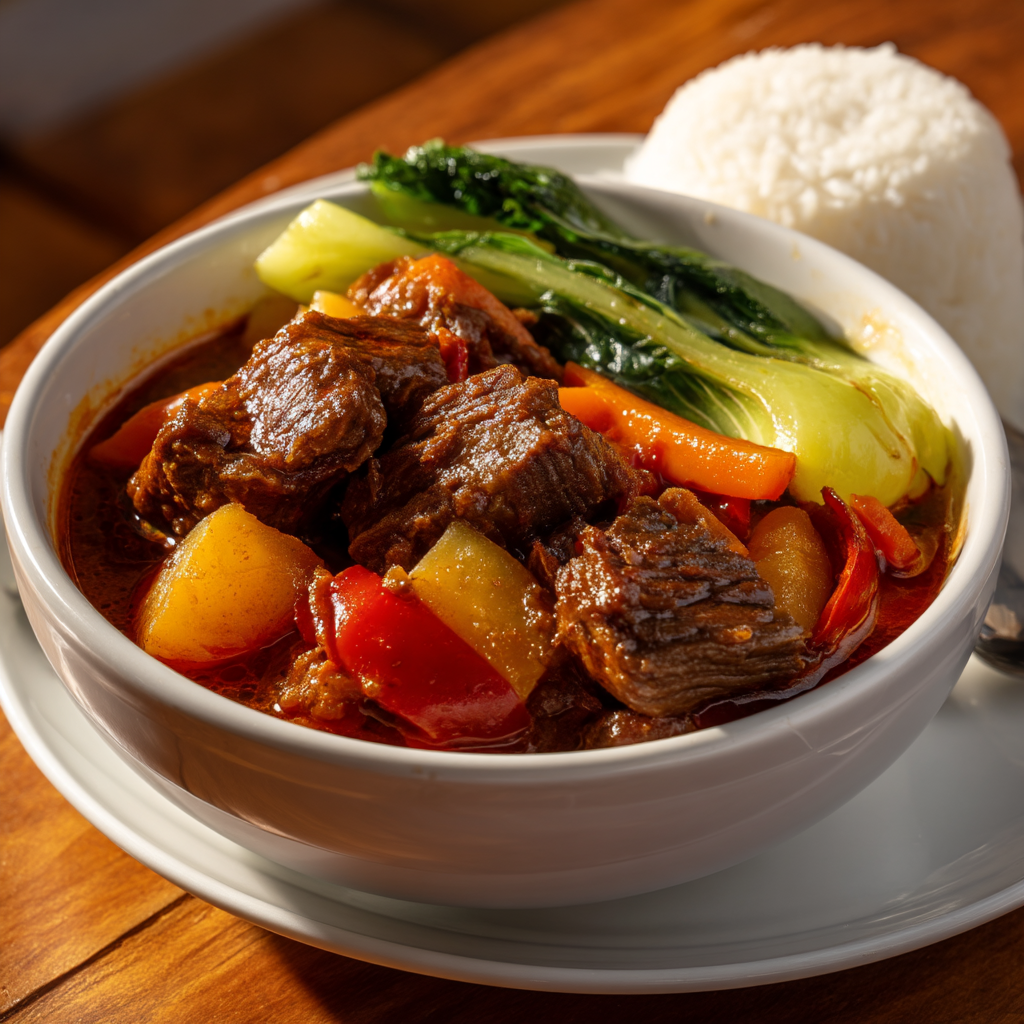
Kapampangan Beef Stew, Braised Low and Slow for Rainy Days
Recipe Overview
Dish Name: Kapampangan Beef Stew with Tomato and Fish Sauce
Cuisine: Modern Kapampangan | Category: Meat Course | Serves: 4
Prep Time: 25 minutes | Cook Time: 2 hours 30 minutes | Total Time: 2 hours 55 minutes
Why This Works
This Kapampangan beef stew delivers what rainy day comfort food should: deep, savory richness from properly seared beef, umami-packed tomato sauce cut with vinegar’s brightness, and vegetables that hold their shape through long braising. The technique here matters more than exotic ingredients. Sear the beef hard to build fond, deglaze properly to capture every bit of flavor, then let low heat and time do what they do best. Unlike the overdone adobo treatment or calamansi-heavy versions flooding food blogs, this focuses on what makes Pampanga cooking distinct: Spanish-influenced tomato braising married to Filipino fish sauce and strategic acidity. The result justifies the time investment. You’ll have fork-tender beef in a sauce concentrated enough to coat rice properly, with vegetables that contribute rather than dissolve into mush.
Ingredients (Serves 4)
For the Beef:
- 1.5kg beef chuck, cut into 5cm cubes, patted completely dry
- 45ml neutral oil (canola or grapeseed)
- Kosher salt and freshly cracked black pepper
For the Braising Liquid:
- 2 large yellow onions, roughly chopped
- 8 garlic cloves, smashed and roughly chopped
- 800g canned whole San Marzano tomatoes, crushed by hand
- 45ml tomato paste
- 60ml Filipino soy sauce (not Japanese, the sweetness matters)
- 30ml fish sauce (Red Boat or similar quality brand)
- 30ml cane vinegar (Datu Puti if available)
- 25g dark brown sugar
- 500ml beef stock, preferably homemade
- 180ml dry red wine (use something you’d drink)
- 3 bay leaves (Turkish, not California)
- 15 whole black peppercorns
For the Vegetables:
- 4 medium Yukon Gold potatoes, peeled and quartered
- 3 large carrots, peeled and cut into 5cm pieces on the bias
- 2 red bell peppers, cut into thick strips
- 200g green beans, trimmed, cut in half
- 150g bok choy, roughly chopped
Optional Traditional Element:
- 30g liver pâté or liver spread (Reno brand if you want authenticity)
Method
Mise en Place (25 minutes)
Cut and season your beef. Pat it aggressively dry with paper towels because moisture is the enemy of proper browning. Season generously with salt and pepper 15 minutes before cooking. Prep all vegetables and have them ready in separate containers. Chop your aromatics. Measure your liquids. Open your tomatoes and crush them with your hands over a bowl. This setup prevents the scramble that ruins braising rhythm.
You need a heavy Dutch oven or enameled cast iron pot that can handle both stovetop searing and long, steady heat. A thin pot will give you hot spots and uneven cooking.
Sear the Beef (12 minutes)
Heat your Dutch oven over medium-high until a drop of water evaporates on contact. Add 30ml oil and wait until it shimmers. Working in two batches, sear the beef cubes without moving them for 3-4 minutes per side. You want aggressive browning, nearly black in spots. Crowding the pan drops the temperature and you’ll end up steaming instead of searing.
Transfer the first batch to a plate. The second batch needs the same treatment. Don’t rush this step. Those dark bits stuck to the pot (fond) are concentrated beef flavor that will define your final sauce.
Build the Aromatic Base (8 minutes)
Reduce heat to medium. If your pot looks dry, add the remaining 15ml oil. Add onions and a pinch of salt, scraping the fond as they cook. Onions need 5 minutes to soften and pick up color. Add garlic and cook 1 minute until fragrant, not browned. Garlic burns fast and turns bitter. Pour in the wine and deglaze aggressively, scraping every bit of fond from the pot bottom with a wooden spoon. Let the wine reduce by half, about 3 minutes. This concentrates flavor and cooks off the raw alcohol.
Create the Braising Base (5 minutes)
Add crushed tomatoes, tomato paste, soy sauce, fish sauce, vinegar, and brown sugar. Stir until the tomato paste dissolves completely. Pour in beef stock, then add bay leaves and peppercorns. If using liver pâté, whisk it in now. The sauce should taste aggressively seasoned at this stage because the beef and vegetables will dilute it. Return the seared beef and any accumulated juices to the pot. The liquid should come halfway up the beef, not cover it completely. Bring to a strong simmer.
Braise the Beef (1 hour 45 minutes)
Once simmering, reduce heat to low. You want gentle bubbles breaking the surface every few seconds, not a rolling boil. Partially cover the pot, leaving a small gap for steam to escape. This is when patience matters. Check every 30 minutes, giving the pot a gentle stir and ensuring the simmer stays steady. After 1 hour, taste the sauce and adjust seasoning. The beef should start yielding to a fork but not falling apart yet.
At the 1.5 hour mark, test a piece of beef. A fork should slide in with minimal resistance. If it’s still tough, keep cooking. Timing varies based on your specific beef cut and heat level.
Add Vegetables in Stages (35 minutes)
After the beef reaches tender stage, add potatoes and carrots. These need time to absorb flavor while cooking through. Cook 15 minutes, maintaining that same gentle simmer. Add bell peppers and green beans next. These vegetables need less time to avoid mushiness. Cook another 12 minutes. Finally, stir in bok choy. Three minutes of heat will wilt it perfectly without destroying texture. Turn off heat.
Rest and Final Adjustments (10 minutes)
Let the stew sit off heat for 10 minutes. This resting period allows the braising liquid to thicken slightly as starches from the potatoes continue working. Flavors also settle and integrate. Taste one more time. If it needs brightness, add vinegar by the teaspoon. If it’s too sharp, a small pinch of sugar balances it. Remove bay leaves before serving.
What You Need to Know
Beef matters. Chuck roast is ideal because its connective tissue breaks down into gelatin during long cooking, giving you both tender meat and body in the sauce. Lean cuts like sirloin will turn dry and stringy. Short ribs work beautifully if you prefer bone-in meat, but cooking time extends to 2.5-3 hours.
Temperature control wins. The difference between good braising and great braising is consistent low heat. If your stove runs hot, use a heat diffuser or move the pot to a 150°C oven after the initial simmer establishes. Set a timer and check periodically rather than constantly lifting the lid, which drops temperature.
Tomato quality shows. San Marzano tomatoes cost more because they’re worth it. Lower acidity and better texture make them ideal for long cooking. If you can’t source them, use the best whole canned tomatoes available. Crushed or diced varieties often include calcium chloride as a firming agent, which prevents them from breaking down properly during braising.
Make-ahead advantage: This Kapampangan beef stew improves dramatically after a day in the refrigerator. The flavors meld, the sauce thickens further, and any excess fat solidifies on top for easy removal. Reheat gently on the stovetop, adding a splash of stock if needed. The stew freezes well for 3 months.
The Result
You should see beef that shreds with gentle fork pressure but holds its shape on the plate. The sauce should coat a spoon heavily without being gluey, glossy from rendered collagen and fat. Vegetables keep their structure while being fully tender, not mushy. That first bite delivers savory depth from the beef and fish sauce, brightness from tomato and vinegar, and sweetness from the caramelized onions and brown sugar working in balance. The texture alternates between tender beef, creamy potato, and crisp-tender vegetables.
Serve this over steamed jasmine rice. The sauce’s consistency is calibrated for rice, not pasta. A sprinkle of fried garlic adds textural contrast if you want it, but the dish doesn’t need garnish to work.
Nutrition Information Based on a 2,000 Calorie Diet (Per Serving)
| Nutrient | Amount | % Daily Value |
|---|---|---|
| Calories | 645 kcal | 32% |
| Total Fat | 32g | 41% |
| Saturated Fat | 11g | 55% |
| Cholesterol | 145mg | 48% |
| Sodium | 1,240mg | 54% |
| Total Carbohydrates | 42g | 15% |
| Dietary Fiber | 7g | 25% |
| Total Sugars | 14g | – |
| Protein | 54g | 108% |
| Vitamin D | 0.8mcg | 4% |
| Calcium | 98mg | 8% |
| Iron | 6.2mg | 34% |
| Potassium | 1,580mg | 34% |
| Vitamin A | 285mcg | 32% |
| Vitamin C | 78mg | 87% |
Flavor Balance
Sweet (4/10): Brown sugar and caramelized onions provide gentle sweetness that rounds out the sauce without pushing into dessert territory. Carrots contribute natural sugars as they braise. The Filipino soy sauce adds subtle sweetness compared to Japanese varieties.
Salty (7/10): Fish sauce and soy sauce handle the heavy lifting here, with kosher salt on the beef adding surface seasoning. This level of salt works specifically because it’s balanced against the dish’s other strong flavors and meant to be eaten with plain rice, which dilutes perceived saltiness.
Sour (4/10): Cane vinegar and tomatoes provide brightness that cuts through the beef’s richness. The acidity level here is assertive enough to prevent the dish from feeling heavy but restrained compared to traditional sinigang or dishes heavy with calamansi.
Bitter (2/10): Black peppercorns and the slight char on seared beef contribute subtle bitter notes. Bay leaves add herbal complexity that reads as gentle bitterness in the background. This is minimal by design, keeping the focus on savory elements.
Umami (9/10): This is where the dish dominates. Beef, fish sauce, tomatoes, and soy sauce all contribute glutamates. The long braising concentrates these flavors further. Liver pâté, if used, amplifies the umami even more. This deep savory quality defines the dish’s character and makes it satisfying.
Wine Pairing
Recommended: Barossa Valley Shiraz
Why: The Barossa Valley produces Shiraz with exactly what this Kapampangan beef stew needs: full body to match the beef’s richness, dark fruit that complements the tomato without competing, and peppery spice notes that echo the whole peppercorns in the braise. The wine’s tannins cut through the fat while its fruit-forward character balances the fish sauce’s funky umami. Barossa Shiraz typically shows chocolate and leather notes that work beautifully with long-braised beef. The alcohol level (usually 14-15%) and oak influence stand up to the dish’s intensity without overwhelming it. Serve at 16-18°C to let the fruit shine without the alcohol becoming aggressive.
Alternatives:
McLaren Vale Grenache: Lighter body than Shiraz but with bright red fruit and spice that works if you find the beef stew too rich for heavy wine. The raspberry and cherry notes provide contrast rather than complement, cleansing the palate between bites. Better choice if you’re serving this on a warmer day.
Margaret River Cabernet Sauvignon: More structured and tannic than Shiraz, with cassis and eucalyptus notes. The firm tannins need the beef’s fat to soften them, making this a classic pairing. Choose this if you want a more serious, contemplative wine experience. The herbal notes in Margaret River Cabernet echo the bay leaves and create interesting complexity.
HACCP-Compliant Storage and Safety
Hot Holding: If serving buffet-style, maintain internal temperature above 60°C. Use a chafing dish or slow cooker on low. Discard after 2 hours at room temperature or 4 hours in hot holding.
Cooling Protocol: Cool from 60°C to 20°C within 2 hours, then from 20°C to 4°C within an additional 4 hours. Divide into shallow containers (no more than 7cm deep) to speed cooling. Place in refrigerator uncovered initially, cover once cooled below 20°C. Do not stack containers until fully cooled.
Refrigeration: Store at 4°C or below for maximum 4 days in airtight containers. Label with preparation date. Check internal temperature is maintained below 4°C. Discard if any off-odors, sliminess, or discoloration develops.
Freezing: Cool completely first. Freeze at -18°C or below for up to 3 months in freezer-safe containers, leaving 2cm headspace for expansion. Label with date and contents. Quality degradation occurs after 3 months though food remains safe.
Reheating: Reheat to internal temperature of 75°C, stirring occasionally to ensure even heating. Verify with a probe thermometer in multiple spots, especially center of largest beef pieces. Bring to a simmer and hold for 2 minutes. Reheat only once. Discard any portions not consumed after reheating.
Disposal: Discard immediately if temperature abuse is suspected (left at 5-60°C for more than 2 hours total). Dispose of leftovers after 4 days refrigeration regardless of appearance.
