


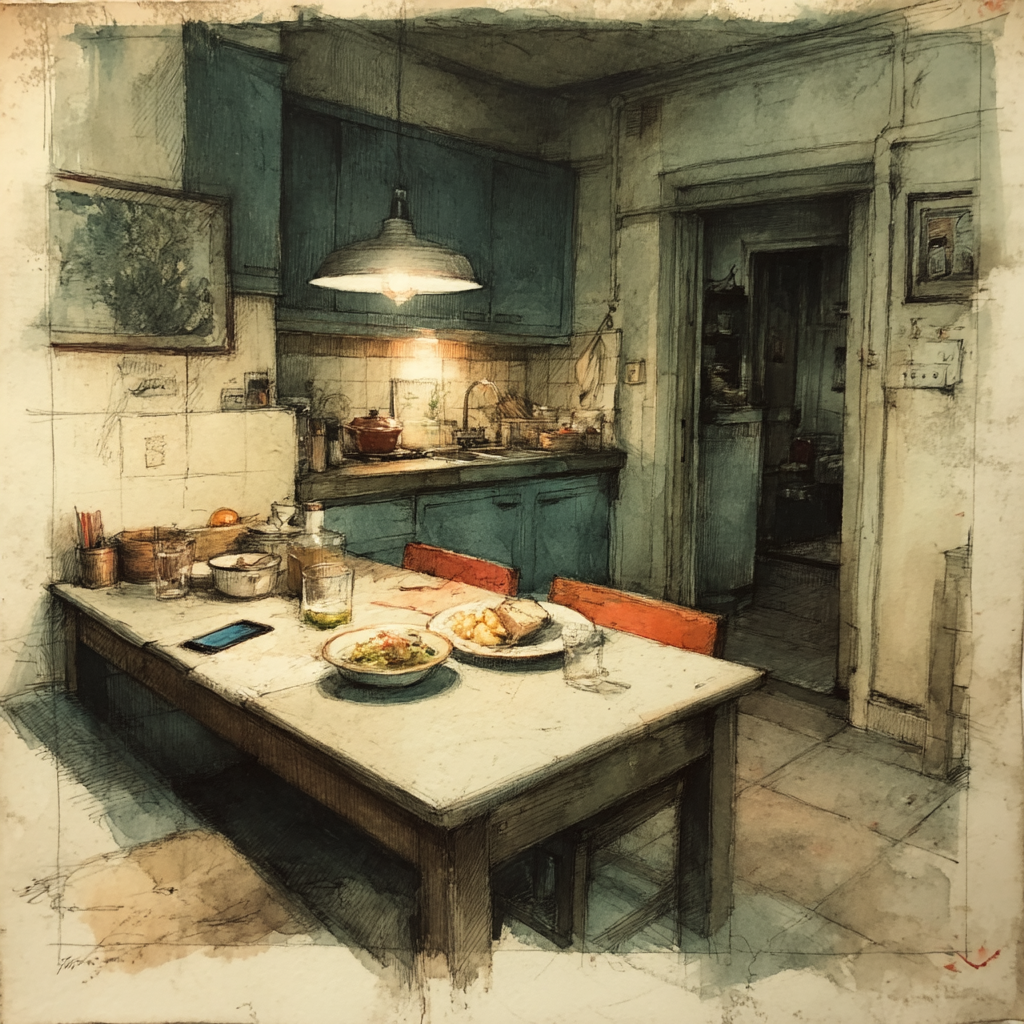
Family Dinner Conversation and the Arguments We Stopped Having
Family dinner conversation didn’t die in a blaze. It just went quiet, like a radio turned down so low you can pretend nothing’s playing. We call it peace, but a lot of the time it’s fear with table manners.
The noise we used to deserve
I grew up around tables that weren’t cute. Laminex, chipped edges, one leg that always wanted to give up. The kitchen smelled like onions and hot oil and whatever cheap roast was doing its slow surrender. You ate because that was the deal. Show up. Chew. Stay.
And you argued.
Not the online kind where you’re auditioning for strangers. Real arguing. Someone would talk about taxes, unions, the price of petrol, whether the boss was a thief or just a bastard doing his job. It wasn’t polite. It was loud, messy, political, and somehow still home.
These weren’t thinkers with podcasts. They were people who’d done shifts and dragged themselves back through the front door. If rent went up, that wasn’t theory. That was groceries. That was school shoes. That was the power bill you paid late and didn’t mention.
Family dinner conversation was where you learned the shape of disagreement without burning the house down.
The polite rot
Somewhere along the line we decided harmony was the goal. We started treating disagreement like a spill on the carpet. Quick, cover it up. Keep it safe. Work was fine. School was fine. The weather was fine. Everything was fine.
Then the phones arrived. Not evil. Just irresistible. A small glow that lets you leave the room without leaving your chair. You can dodge the hard question, skip the awkward uncle, disappear into someone else’s life. The table got quieter, but not calmer. It was the silence of people waiting for the meal to be over.
But hunger isn’t just food. Hunger is attention. Hunger is being seen. When the table stopped being a place where you could collide, you stopped practising how to come back from it. Any clash starts to feel like a threat, not a normal part of being human.
That’s not peace. That’s avoidance with good lighting.
family dinner conversation was our first democracy
Here’s the dirty truth. The table was never pure. It could be cruel. Someone always had more power, a louder voice, a sharper tongue. I’m not romanticising it. I’m saying it trained you.
It taught you how to state a thing and cop the reaction. How to hold your ground without turning into a prick. How to apologise when you went too far. How to shut up when you were wrong, which is rare and valuable.
It also taught you something harder. The person you love might vote the opposite way and still bring you soup when you’re crook. You can disagree and still belong. You can argue and still pass the bread.
These days we do nice like it’s a brand. We talk like HR wrote the script. If something sharp shows up, we smother it with a joke or a story about a holiday we can’t afford. So when the big stuff hits, we either explode or we ghost.
Family dinner conversation used to be the training ground for staying in the room.
The food that keeps you honest
There’s food that doesn’t let you fake it. Stew on the second night, thickened and better for the wait. Toast with Vegemite laid on too heavy because you’re not in the mood for balance. A chicken parmy at the pub, chips sweating under the schnitty. Comfort food, sure, but also honest food. It doesn’t ask you to perform. It just asks you to show up.
I think that’s what the table can still be, if you let it. Not a stage. Not a tribunal. A place where you can say what you mean without trying to win. A place where someone can disagree with you and you don’t reach for the exit, digital or otherwise.
Maybe the fix is small and awkward. Phones away. Sit through the first ten minutes of nothing. Let the silence itch. Ask the question you’ve been avoiding, not to provoke, just to know. Let someone answer in a way you hate, and stay. Eat. Stay.
Family dinner conversation won’t save the world. But it might save the people in your kitchen from becoming strangers who share a postcode and a streaming account.
And if you can’t argue at the table, where can you.
