


Street Food Vendors: The Revolution Nobody Declared
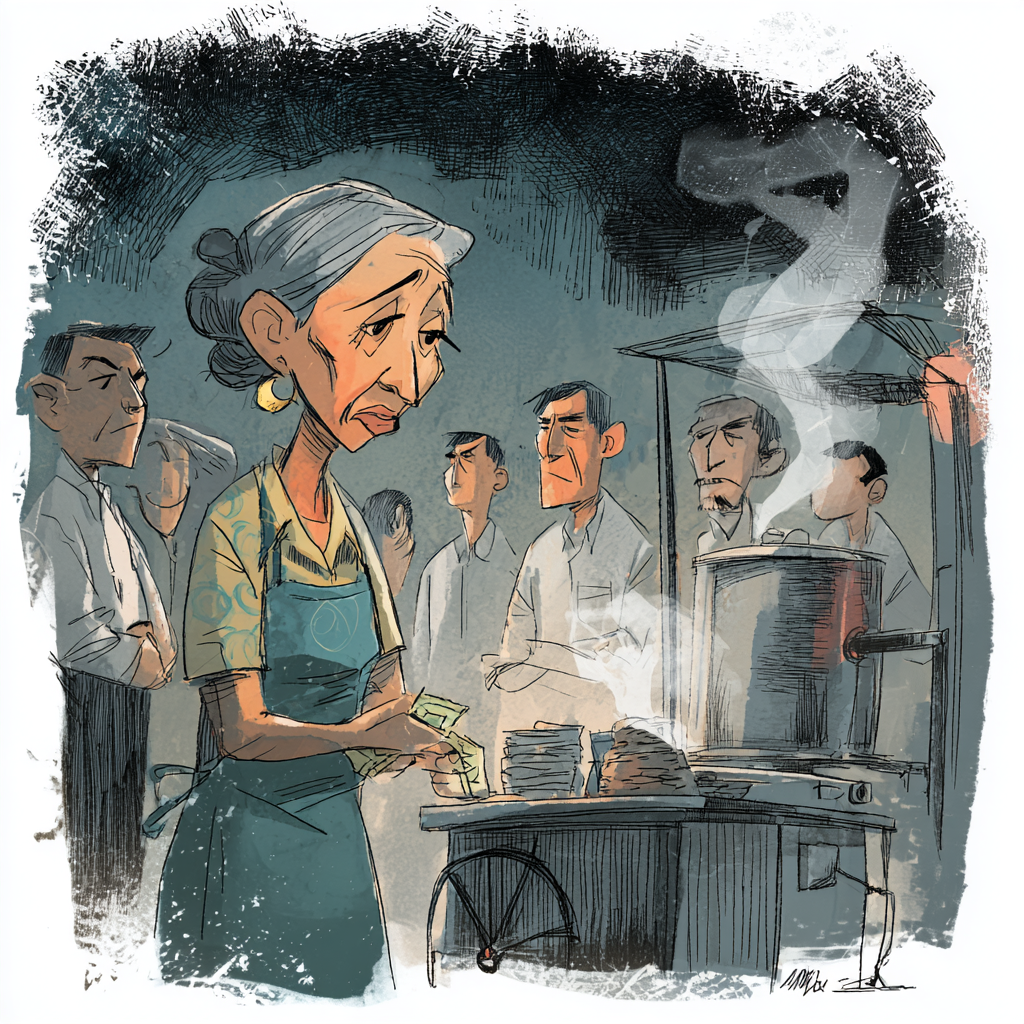
She’s been at this corner since 5am. Cart, two burners, a pot that’s seen more years than her youngest kid. Street food vendors don’t do reservation systems. No waitlist. No PR firm sending emails about her “culinary journey.”
Just food. And a line that doesn’t quit.
Scarred forearms. Practiced indifference. She handed me something in a paper wrapper that tasted like thirty years of getting it right. Because it had.
She charges less than a subway token. She’s been doing this longer than most line cooks have been alive. Nobody’s writing trend pieces about her. Nobody’s flying in to stage in her kitchen. There is no kitchen. There’s a cart, a burner, and thirty years of knowing exactly when to turn the heat down.
5am, Nobody Watching
Street food gets called a revolution now. Food media loves that word. Revolution. Like it just started. Like somebody discovered it.
She didn’t get the memo. She’s been doing this since before the think pieces. Before the chef with the James Beard award started putting “street-inspired” on his tasting menu at $34 a course. Before the documentary. Before the algorithm decided authenticity was searchable.
Her name is Soledad. She told me that when I asked, then went back to work like the question was already boring. Fair enough.
She learned this from her mother. Her mother learned it from hers. The recipe isn’t written down anywhere. It lives in muscle memory and in the specific way she tilts the pan. You can’t stage that. You can’t reverse-engineer it in a test kitchen and call it a tribute.
She has a son who wanted her to stop. Get a real job, he said. Indoor work. She laughed when she told me that. Not bitter. More like she found the suggestion genuinely funny. He’s an accountant now. She’s still on the corner. She says the corner is the real job. Everything else is just office work with air conditioning.
She’s not saving culture. She’s not performing heritage. She’s paying rent. Those are different things, and the food world’s confusion over them is the only real recipe for bullshit they’ve ever perfected.
What the Chef Sells
The celebrity chef isn’t entirely wrong. I hate that.
Someone had to make audiences care. Someone had to build the cultural permission structure that got a certain kind of person to stop at a cart instead of walking past it. That work happened in restaurants with PR budgets and Netflix deals and books with good cover design. Bourdain did it. Others did it after him. They pointed a camera at Soledad’s equivalent and said: look at this. Pay attention.
And people did.
So maybe the chef isn’t the villain. Maybe he’s the translator. Ugly word for it, but accurate.
Except the translation only flows one direction. The chef gets the profile. The cookbook deal. The quote in the trend piece about street food’s “moment.” Soledad gets referenced as inspiration. Not as peer. Not as equal. As source material. She’s the raw ingredient. He’s the finished product.
I watched her count her cash from the morning rush. Quick. Not self-conscious. Folding it into her apron pocket with a look that wasn’t pride exactly. More like arithmetic. Then she pulled out her phone. Checked something. Smiled at whatever it was. Put it away. Back to the next order. No idea what she was looking at. None of it was for me. That stung more than it should have.
What I’m Actually Hungry For
Why do I need her food to be uncelebrated to love it? No clean answer. Just the question sitting there.
What happens to my experience of that paper-wrapped thing if she gets famous? If she opens a second location? If her daughter starts an Instagram account?
Does the food change? Or do I change?
I need her on that corner. So I can feel like the kind of person who notices things. That’s my dirty secret.
My whole career. She doesn’t need this essay. The line at 5am is her validation. Has been for twenty years.
I bought a second portion. Told myself it was research. Stood there eating it on the pavement while she served six more people without looking up once. The food was the same as the first time. Same as it’ll be tomorrow. That kind of consistency takes everything. Most chefs I know can’t hold it on their best day with a full brigade behind them.
She did it alone. Before sunrise. For the price of a bus fare.
A guy next to me eating the same thing checked his watch. Late for something. He finished in four bites, dropped the wrapper, walked off fast. Soledad didn’t watch him go. She was already on the next order. The wrapper sat on the pavement.
Just lunch. Same as it’s always been.
