


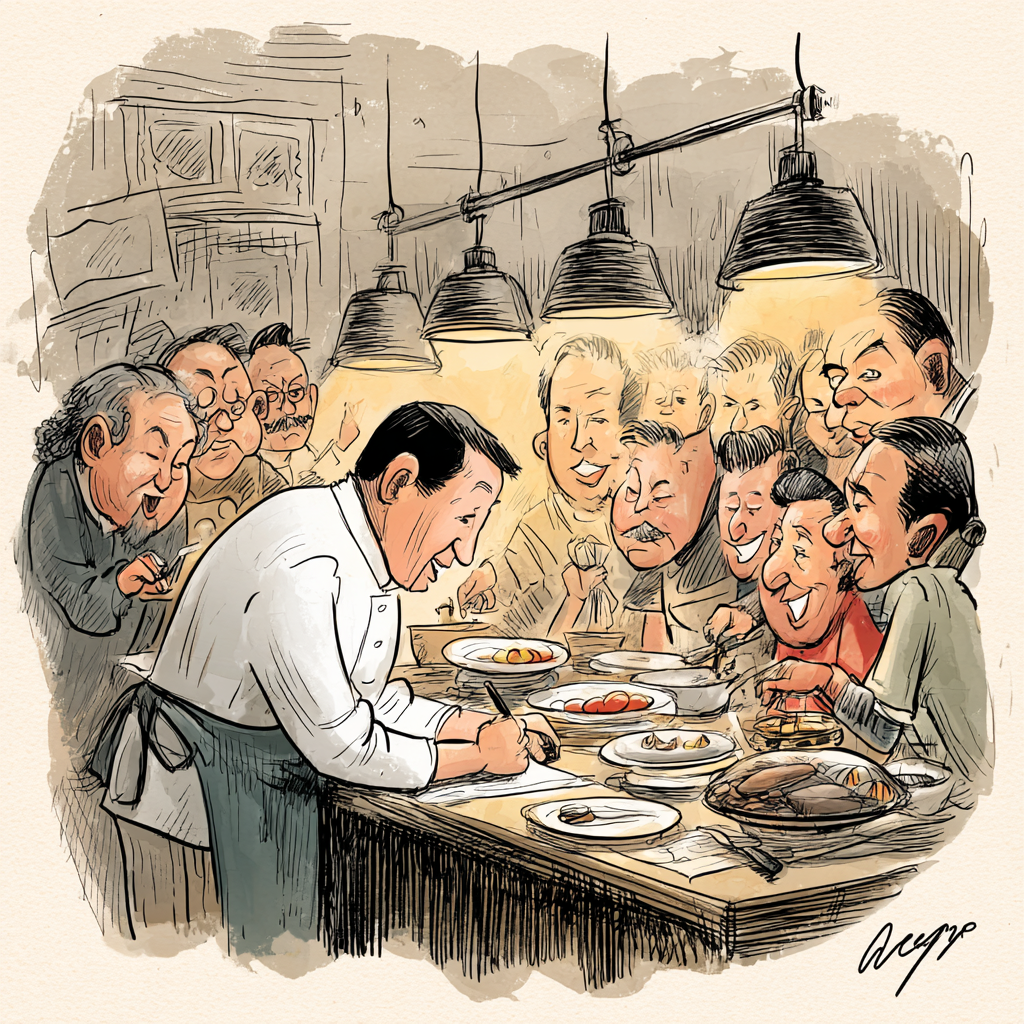
The Myth of Celebrity Chef Culture: Fame vs. Food
The flash goes off. Right in my eyes.
I blink. Tears. Stinging.
Across the room, he’s smiling. White teeth. Perfect jacket. No stains. Never stains. The glare is bright. The sweat is hidden.
I’m holding a fork. The food is cold.
Room smells like burnt butter and perfume. Too much perfume. Covering the smell of the drain. Covering the smell of the panic back there.
People are holding up phones. Screens glowing. Taking pictures of plates they haven’t touched. Food gets cold while they find the filter. They don’t care. They want the proof. They want to say they were here.
I’m one of them. Fork in hand. Watching the light instead of the plate. This is celebrity chef culture eating itself alive.
Behind the pass
David runs the kitchen. Not the brand. The actual heat.
I watched him Tuesday night. Service was drowning. Tickets stacking up on the rail like dead birds. Paper fluttering. Sound of the printer never stopping. Chattering.
He moved fast. Knuckles nicked. Shiny with oil. Turmeric stains on his fingers. Chilli. Something metallic. Coins maybe. Or blood.
He yelled at a kid for plating the scallops wrong. Again. Voice cracked. Not angry. Tired.
Kid looked sixteen. Hands shaking. Dropped a spoon. Clattered on the tile. Didn’t pick it up. Just froze.
I looked at his shoes. Black slips. Too big. Laces undone. Dragging slightly when he walked. Acne on his neck. Red. Inflamed. He wasn’t looking at David. He was looking at the floor. At the spoon. At his own failure.
I made eye contact. He looked away first.
David picked it up. Wiped it on his apron. Threw it back. Didn’t say sorry. Didn’t say anything. Just went back to the pan. Butter sizzling. Smoke rising.
The dining room loved him. They wanted the photo. The signature on the menu. They didn’t taste the salt. Too much salt. Rushed.
Swallowed it. Cold. Needed the validation more than the heat.
David came out later. Wiped his hands on a rag that was already black. He sat down. Didn’t look at me. Looked at his phone.
Screen light on his face. Made him look sick. Grey.
“You think I want this?” he said.
He didn’t mean the yelling. He meant the lights. The cameras. The book deal he signed last year.
“Try making payroll without the face,” he said. “Investors don’t care about the soup. They care about the cover of the magazine.”
He had a point. A good one.
Without the brand, the rent goes unpaid. The dishwasher loses his job. The line cook goes back to freezing corners and broken equipment. The fame pays the light bill. It keeps the stove on. It’s a machine. You feed the ego, the machine runs.
Payroll clears. Staff gets paid.
Glass of water. Condensation. He didn’t drink.
“So you sell yourself,” I said.
“I sell the idea of me,” he corrected. “The food is secondary. Always has been.”
He wasn’t proud. Just factual. Like telling me the gas bill was due.
Maybe he’s right. Maybe the food was always secondary. Maybe we lied to ourselves when we thought it was about the taste.
The ticket rail
Here’s where it breaks.
I watched him sign autographs for twenty minutes. The risotto sat under the heat lamp. Dried out. Hard edge forming on the rice.
The server waited. Shifted weight. Looked at the plate. Looked at David.
David kept signing. Smiling. Asking a woman where she was from. Ohio. Nice. Great.
The risotto died.
He handed the menu back. Turned to the server. “Go.”
The server took the plate. Didn’t say anything. Just walked.
Opened my mouth. Closed it. Coward.
Could have said something. About the food. About the kid shaking back there. About the rice turning to cement under the lamp.
Didn’t say anything.
Posted the photo later. Tagged him. Fed the algorithm.
Caption said “Incredible night.” Lie.
Wanted to tell people I was there. Needed them to know I was inside the room where it happens. Needed the proximity.
I’m part of the machine.
Why do I need the name? What am I hungry for?
It’s not the food. It’s the reflection. I want to see myself in the glow. Even if it burns.
David knows the dishwasher’s kid’s name. Maria. Six years old. Likes dinosaurs. He asks about her every shift.
Envelopes at midnight. Thick. Cash only.
He hands them out himself. Looks them in the eye.
Not a monster. Wish I could hate him. Can’t.
He’s a guy trying to keep the lights on. Trapped in the thing he built.
If he stops smiling, the checks bounce. If he stops signing, the investors leave. If he stops being the brand, the kitchen closes.
So the risotto dies. So the kid shakes. So the food gets cold.
He looked at me. Eyes red. Smoke in the room. Or just exhaustion.
“You write about it,” he said. “You tell them the truth.”
“What truth?”
“That it costs something.”
He stood up. Went back to the line. Back to the heat. Back to the tickets.
I finished the scallops. Cold. Salty.
Tasted like metal.
Paid the bill. Left a tip. Bought the book at the front desk.
Didn’t need the book. Already read it. Bought it anyway.
Walking out, the air was cold. My throat felt sanded.
Street was wet. Rain starting. Smelled like exhaust and wet concrete.
Looked at the receipt. His name printed at the top. Big letters.
Crumpled it. Put it in my pocket.
Still there.
Feel it when I walk. Crinkling. Reminding me.
Every step. The sound of paper crushing. The name still legible through the wrinkles.
I reach in sometimes. Touch it. Make sure it’s still there.
It is.
