


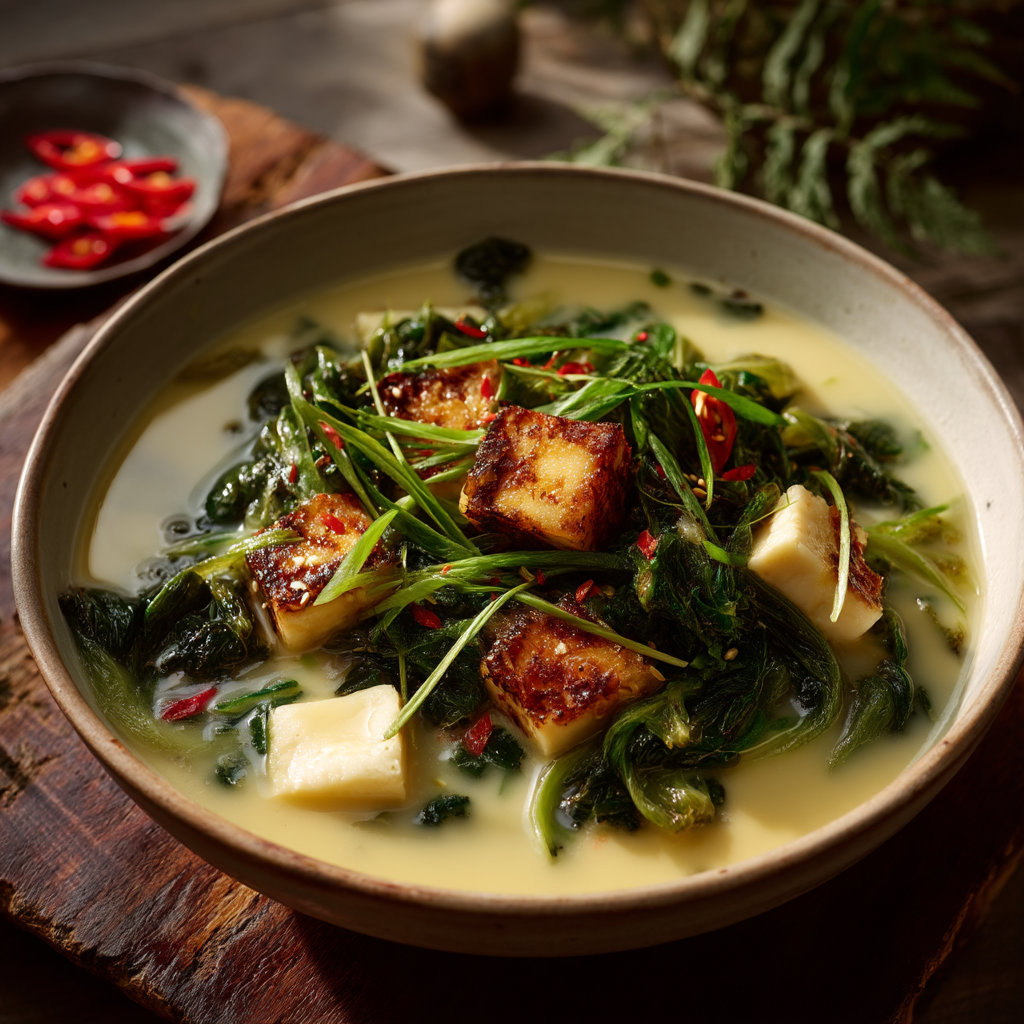
Korean Rainy Day Soup with Perilla Seed Broth and Braised Radish Greens
Recipe Overview
Dish Name: Deulkkae Siraegi Tang (Perilla Seed and Dried Radish Green Soup) Cuisine: Korean | Category: Soup | Serves: 4 Prep Time: 25 minutes | Cook Time: 55 minutes | Total Time: 80 minutes
Why This Works
Most Korean rainy day soup content defaults to the same tired lineup: kimchi jjigae, doenjang jjigae, sundubu. This Korean rainy day soup takes a different path entirely. We’re building a broth from the ground up using three under-represented Korean pantry staples that create something genuinely new: toasted perilla seeds ground into an emulsified paste for body and nutty depth, dried radish greens (siraegi) braised until tender for mineral complexity, and roasted barley layered with anchovy-kelp stock for a toasted, oceanic backbone. The result is a soup that feels unmistakably Korean but doesn’t exist in any published cookbook. It delivers the deep comfort you need when rain hammers the windows, with a texture and flavor profile that stands apart from the usual suspects.
Ingredients (Serves 4)
For the Stock Base:
- 1800ml cold water
- 30g dried anchovies (medium size, heads and guts removed)
- 15g dried kelp (dashima), wiped clean
- 40g hulled barley, dry-toasted in a pan until golden and fragrant
- 3 dried shiitake mushrooms
For the Perilla Emulsion:
- 80g toasted perilla seeds (deulkkae)
- 200ml reserved hot stock
- 1 tablespoon doenjang (fermented soybean paste)
- 1 teaspoon guk-ganjang (Korean soup soy sauce)
For the Radish Greens:
- 60g dried radish greens (siraegi), soaked in cold water for 30 minutes
- 2 tablespoons neutral oil
- 4 garlic cloves, minced
- 1 tablespoon guk-ganjang
- 1/2 teaspoon freshly ground black pepper
For Finishing:
- 200g firm tofu, cut into 2cm cubes
- 150g Korean radish (mu), cut into thin matchsticks
- 2 spring onions, white parts cut into 4cm lengths, green parts sliced thinly
- 2 fresh red chili peppers, sliced on the bias
- 1 tablespoon toasted sesame oil
- Salt to taste
- Additional guk-ganjang as needed
Method
Mise en Place (25 minutes)
Remove heads and guts from anchovies. Toast barley in a dry pan over medium heat until it smells like popcorn, about 4 minutes. Soak dried radish greens in cold water for 30 minutes, then squeeze dry and chop roughly into 5cm lengths. Wipe kelp with a damp cloth but don’t rinse it. Toast perilla seeds in a dry pan until they start to pop and smell intensely nutty, about 3 minutes, then let cool. Prep all vegetables as specified. You’ll need a blender, a medium pot for stock, a small pan for braising greens, and a spice grinder or mortar and pestle.
Build the Foundation Stock (20 minutes)
Add cold water, prepped anchovies, kelp, toasted barley, and dried shiitake to your pot. Bring to a gentle simmer over medium heat. The moment it reaches a simmer, remove the kelp (overcooking turns it slimy and bitter). Let the stock simmer gently for 15 minutes. The barley will release starch and create body, the anchovies will provide umami, and the shiitake will add a subtle earthiness. Strain through a fine-mesh sieve, pressing gently on the solids. You should have about 1500ml of stock. Reserve 200ml in a separate container for the perilla emulsion.
Braise the Radish Greens (12 minutes)
Heat neutral oil in a small pan over medium heat. Add minced garlic and cook until fragrant but not colored, about 30 seconds. Add the squeezed-dry radish greens and stir-fry for 2 minutes. The greens will darken and become aromatic. Add 1 tablespoon guk-ganjang and black pepper, then add 100ml of your prepared stock. Cover and braise for 8-10 minutes until the greens are completely tender and have absorbed most of the liquid. They should taste mineral-rich and slightly sweet. Set aside.
Create the Perilla Emulsion (8 minutes)
Grind your toasted perilla seeds in a spice grinder or pound in a mortar until you have a coarse powder. Transfer to a blender with the 200ml reserved hot stock, doenjang, and 1 teaspoon guk-ganjang. Blend on high for 60 seconds until you have a smooth, creamy emulsion that looks like light beige tahini. This is your flavor and texture bomb. The perilla seeds contain oils that emulsify with the stock, creating a velvety mouthfeel that coats the palate. Don’t skip the blending time; you want complete emulsification.
Combine and Simmer (10 minutes)
Return your main stock to medium heat. Whisk in the perilla emulsion thoroughly until the soup turns creamy and pale. Add the braised radish greens along with any remaining braising liquid. Add the radish matchsticks and spring onion whites. Bring to a gentle simmer and cook for 5 minutes until the radish is tender but still has some bite. The soup should be thick enough to coat a spoon but still pourable.
Final Assembly (5 minutes)
Add tofu cubes and sliced red chilies. Simmer for 2 minutes just to heat the tofu through. Taste and adjust seasoning with salt or additional guk-ganjang. The soup should be savory with nutty complexity, slight mineral funk from the greens, and a toasted grain quality from the barley. Finish with sesame oil and green onion tops. Serve immediately in individual bowls, making sure each person gets tofu, greens, radish, and plenty of that creamy perilla broth.
What You Need to Know
The perilla seed emulsion is what makes this Korean rainy day soup different from anything else in the canon. Perilla seeds contain high levels of omega-3 fatty acids that emulsify beautifully when blended with hot liquid, creating a texture similar to a nut-based cream but with a distinctly Korean flavor profile. If you can’t blend them smooth enough, the soup will be grainy. Use a high-powered blender and give it the full 60 seconds.
Dried radish greens (siraegi) can be found at Korean grocers. They’re traditionally used in their own namesake soup, but here we’re treating them as a supporting player. The soaking and braising process is non-negotiable. Skip the soak and they’ll be tough and fibrous. Skip the braise and they won’t integrate into the soup properly.
The stock needs to be made fresh. Kelp removed at the exact moment of simmering prevents bitterness. Anchovies with heads and guts left in make the stock cloudy and fishy rather than clean and oceanic. The toasted barley is doing double duty as both a flavor element and a natural thickener, reinforcing the creaminess from the perilla emulsion.
This soup thickens as it sits due to the perilla oils and barley starch. If reheating, you may need to add a splash of water or additional stock to restore the proper consistency.
The Result
You’re looking at a bowl of soup that’s creamy without dairy, deeply savory without being aggressive, and texturally complex in a way that keeps you coming back. The broth should be pale beige, almost milky, with visible flecks of perilla and dark green ribbons of radish greens throughout. The first spoonful delivers toasted grain notes from the barley, followed immediately by the nutty richness of perilla and the mineral depth of the greens. The tofu provides soft protein punctuation, while the radish matchsticks add crisp freshness. The sesame oil and spring onions brighten everything at the end. It’s the kind of soup that makes you understand why Koreans reach for hot broth when the weather turns cold and wet.
Nutrition Information Based on a 2,000 Calorie Diet (Per Serving)
| Nutrient | Amount | % Daily Value |
|---|---|---|
| Calories | 285 kcal | 14% |
| Total Fat | 18g | 23% |
| Saturated Fat | 2.5g | 13% |
| Trans Fat | 0g | 0% |
| Cholesterol | 15mg | 5% |
| Sodium | 920mg | 40% |
| Total Carbohydrates | 22g | 8% |
| Dietary Fiber | 5g | 18% |
| Total Sugars | 3g | – |
| Protein | 14g | 28% |
| Vitamin D | 0.8mcg | 4% |
| Calcium | 280mg | 22% |
| Iron | 4.2mg | 23% |
| Potassium | 485mg | 10% |
| Omega-3 Fatty Acids | 3.2g | – |
Flavor Balance
Sweet (2/10): Minimal sweetness from the natural sugars in radish and the slight caramelization of toasted barley. This isn’t a sweet soup; it relies on savory depth.
Salty (7/10): Anchovy stock, guk-ganjang, and doenjang provide layered salinity. The saltiness is assertive but balanced by the creamy perilla emulsion and the mineral quality of the greens.
Sour (1/10): Virtually no acidity. The doenjang provides the faintest fermented tang, but this soup doesn’t rely on sour notes for balance.
Bitter (3/10): Toasted barley and perilla seeds contribute a pleasant, nutty bitterness that adds complexity without dominating. The dried radish greens have a subtle bitter mineral edge.
Umami (9/10): This is where the soup lives. Anchovy stock, kelp, shiitake, doenjang, and perilla seeds create multiple layers of savory depth. The umami is rounded and persistent, coating your palate long after you swallow.
HACCP-Compliant Storage and Safety
Cooling Procedures
- Cool soup to 21°C within 2 hours by transferring to shallow containers (no more than 10cm deep) and placing in an ice bath or refrigerator
- Reduce temperature from 21°C to 4°C within an additional 4 hours
- Do not cover containers until soup reaches below 21°C to prevent condensation and bacterial growth
- Never leave soup at room temperature for more than 2 hours total
Refrigeration Guidelines
- Store in airtight containers at 0-4°C
- Maximum holding time: 3 days
- Label containers with preparation date
- Store on middle or bottom shelves, never above raw proteins
- Perilla emulsion may separate during storage; whisk vigorously when reheating
Freezing Guidelines
- Cool completely before freezing following procedures above
- Transfer to freezer-safe containers, leaving 2cm headspace for expansion
- Freeze at -18°C or below
- Maximum holding time: 2 months
- Note: Tofu texture will become spongier after freezing; consider adding fresh tofu when reheating frozen soup
Reheating Procedures
- Reheat to internal temperature of 74°C, verified with a food thermometer
- Bring to a rolling boil, then reduce to simmer for at least 2 minutes
- Stir frequently to ensure even heating throughout
- Do not reheat more than once
- Add 50-100ml fresh stock or water if soup has thickened excessively during storage
Disposal Guidance
- Discard soup if stored beyond maximum holding times listed above
- Discard immediately if soup develops off-odors, visible mold, or unusual color changes
- Discard if soup has been left at room temperature for more than 2 hours
- Discard if reheating temperature does not reach 74°C within 1 hour
