


Confessions from Inside the Good Taste Trap
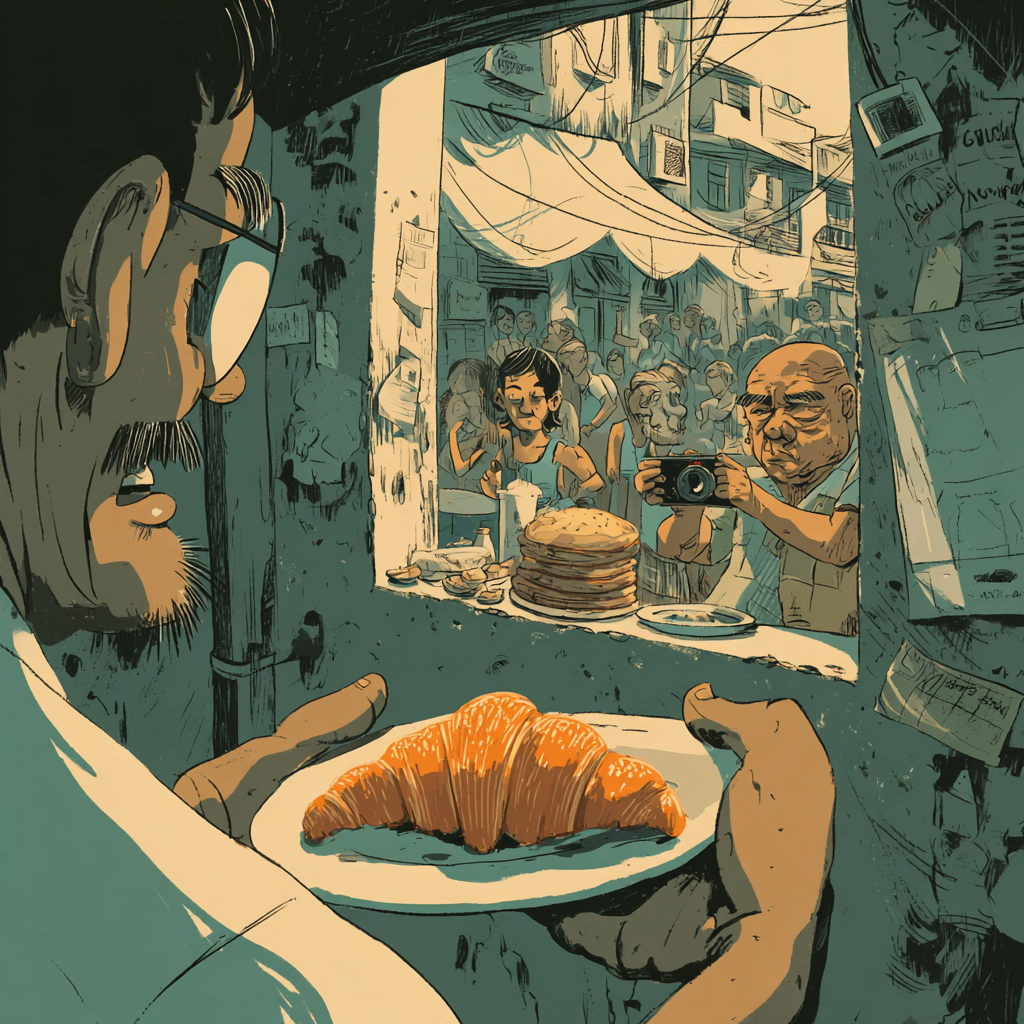
The other night I watched a cook. She made a French onion soup croissant. Took three hours. I waited outside her Brooklyn bakery. People brought stools. They’d been there since dawn. For what? The chance to pay thirteen dollars for something no one asked for.
We’ve become experts at missing the point. We call it refined taste. What it really is? A trap.
Wait in the morning
The line moved slow. People tapped phones. Plugged in earbuds. Made TikToks about waiting. Said how rare this was. How special. Liveblogs of anticipation. I wanted it too. Needed that social credit. Those filter-friendly layers. Matcha-mango swirl against golden crust. The sunset colors.
Funny. Ten years ago these same people would’ve mocked anyone waiting for a croissant. Called them suckers. Now it’s the smart thing to do. The cultured thing.
I used to travel for food. Real travel. Dangerous places. Where you got sick. Made mistakes. Learned. Now people do Bourdain cosplay from their iPhones.
I caught myself wanting the look more than the taste. Wanted the post. Needed the yes. Fuck me. There it is.
Who serves the safe
Met Rosa later. Kitchen staff. She’d been rolling those croissants since 4 a.m. Five kids back in Oaxaca. Sends money weekly. Works six days. Makes six types of hyperflavor pastry. Asked her if she eats any.
She smiled. Tasted once. The French onion version. Said it was salty. Too salty. “Like tears,” she added. Then laughed. A joke only she understood.
Her hands shook from fatigue. But she kept working. While people outside documented their “experience.” Their precious little culinary adventure.
She’d saved enough to send her daughter to nursing school. Used to be farm work. Now it’s laminated dough. She preferred the farm. “Easier to understand,” she said.
The good taste trap
This is the trap. What good taste means now.
We’ve traded curiosity for safety. Knowledge for aesthetics. Hunger for content. No wonder we’re all starving.
People defend it. They say food sharing builds community. Makes cuisine accessible. Lets everyone be a food explorer. They’re not wrong. I’ve used those arguments. Still do sometimes.
I get it. Social media did open doors. Made once-exotic ingredients available everywhere. Safeway has three kinds of kale now. People travel through food when they can’t travel otherwise. That’s not nothing.
But here’s what they miss. Or won’t see.
The more choices we get, the less we actually taste. The safer our palates become. We want food that fits the feed. Food that looks like other food we liked. Everything gets cranked to eleven—multi-hyphenate flavors that shout in your face. But nothing actually surprises us.
Real taste isn’t safe. Real taste makes you uncomfortable. It asks questions. Makes you examine privilege. Tells you the labor behind your aesthetic. Forces you to see Rosa’s hands shaking.
Food was supposed to connect us. Now it connects us to feeds. Not farms. Not people. Not understanding.
I used to think bad taste was the enemy. Turns out good taste might be worse. A mask. Class anxiety dressed as curiosity. A safety net that catches nothing.
The real question
I stood there with Rosa. She wiped flour from her apron. Looked at the line still waiting outside. Thirty people deep. All wanting more.
Didn’t see a single one of them look at her. Or even know her name.
When did sharing a meal become more important than sharing the table?
I’ve asked this question on panels. At TED talks. Made people feel bad. Made myself feel better.
But the worse question? The one I can’t answer?
Why do I keep lining up too?
Rosa handed me a croissant. Off the books. Something extra. Not for show. Warm. Simple. No hyperflavors. Just butter and flour and time.
She didn’t ask for anything. Didn’t want credit. Just made sure I ate.
