


AI Search Optimization for Restaurants: A Field Operator’s Blueprint
Customers are still searching for you. But if your GBP is stale, your menu is mismatched, and your digital status says “Closed” when your door is open, AI will skip you. Independent operators once won local search through proximity and 50+ reviews. Not anymore. Today’s discovery engines—Google AI Overviews, Siri, Gemini, ChatGPT—summarize structured data. If yours is inconsistent or incomplete across platforms, you are functionally invisible. Gone from maps, answers, and intent-based discovery.
The shift to AI search optimization for restaurants isn’t digital strategy. It’s operational visibility. The top 0.1% don’t chase rankings. They run systems so truthful, so coherent, so frequently updated that search engines cling to them.
Their visibility is a byproduct of complete, enforced operational habits. They don’t win because they’re loud. They win because they are trustworthy across every surface, every day.
Visibility Comes from Systemic Coherence
Old SEO strategies—keywords, links, vanity web pages—don’t hold. AI uses structured confirmation from multiple surfaces: business hours, menus, reviews, photos, and map data. Platforms cross-reference you. Apple pulls from its own listing ecosystem, not Google. Siri doesn’t care about your backlinks. Gemini mirrors what’s reliably fresh across surfaces. ChatGPT strings together what users actually say about you—reviews, responses, Q&A sections—not what you think you wrote best.
If those signals misfire or go stale, you’ll vanish. Not on a penalty. Just on a lack of proof.
AI visibility now depends on these interrelated signals:
- Business hours and attributed open status
- Menu accuracy, pricing, diet tags, and update recency
- Photos that match seasons and specials
- Reviews that suggest live operation
- Responses that reflect current management
This isn’t marketing. It’s data cleanliness as operational ritual.
What the Best Operators Do: Ritualized Truth
Top-tier operators don’t assign digital tasks. They embed them into service workflows. If something that affects visibility happens—new menu item, special wine pairing, safety complaint—it kicks off a sequence of rituals. The system won’t run unless those steps are physically enforced.
Example 1: Menu Changes
- Step 1: Chef signs off on item and cost
- Step 2: FOH prints new physical menu
- Step 3: Manager updates menu syndication platform
- Step 4: Waits for confirmation email
- Step 5: Confirms physical copy is stamped and confirmation email is stapled to back
The change is not complete until digital and printed proofs match. No exceptions.
Example 2: Review Management
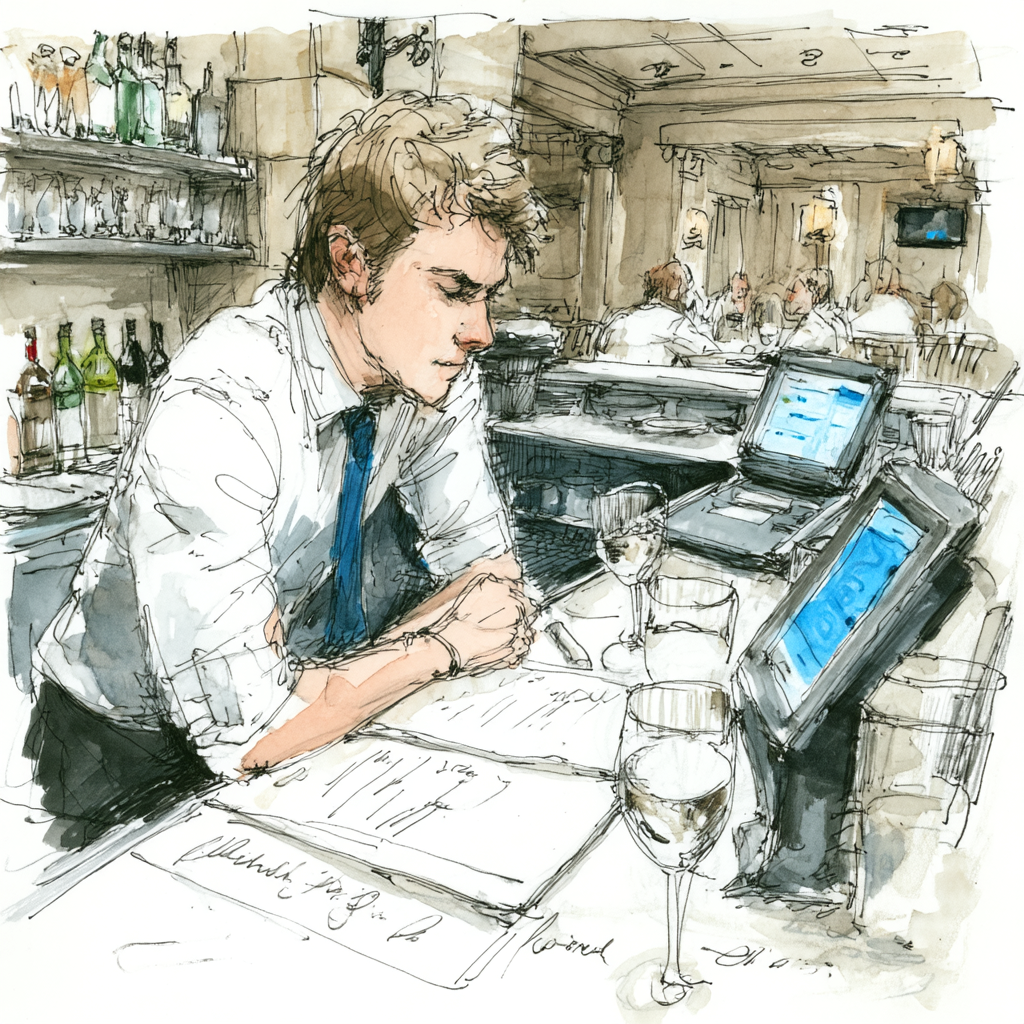
- Pre-shift managers open dedicated tablet that only runs review dashboards
- Last 24 hours of reviews read aloud in pre-shift
- Responses written before opening—that shift
- All response drafts cross-checked for operational issue patterns
This ensures reviews aren’t just customer service follow-ups. They’re operational inspections in disguise.
Example 3: Attribute Maintenance
- Open/close checklist includes verifying status on Google and Apple
- Monday checklist includes holiday hours configuration check
This is treated like cleaning the beer lines. If you skip it, systems fail.
Signal Hierarchy: What Matters Most in a Panic
When time or bandwidth is low, not every signal gets attention. Top-tier ops teams triage based on what damages search visibility fastest.
Tier 1: Factual Locks (Check Daily)
- Open/Closed status (Google + Apple)
- Primary business hours
- Physical location and geocode
Error here = total disappearance from “Open now” and “near me” queries.
Tier 2: Offer Definition (Check After Menu Changes)
- Menu accuracy (item presence, pricing, dietary tags)
- Attributes (outdoor seating, kid-friendly, Wi-Fi, takeout)
Error here = filtered out of specific-intent queries (e.g. “best vegan spot with patio”).
Tier 3: Trust & Engagement Signals (Check Weekly)
- Recent photo uploads
- Active GBP posts
- Response cadence on reviews
Lapses here = decay of engagement ranking, lower “best of” inclusion.
If your system’s on fire this week, fix Tier 1 first. The others can queue behind.
How to Recognize You’re Invisible
Quick search test: Open private browsing and search, “best [your cuisine] near me with [key modifier].” If you don’t appear in the first screen:
Step 1: Check GBP → Are you marked open?
Step 2: Check Apple Business → Is your location status accurate?
Step 3: Check Yelp → Are you listed in the category you expect (“Italian Restaurant”, not “Pizza Place”)?
Step 4: Check menu copy → Are dietary flags like “vegan,” “gluten-free” missing from item names?
The AI is playing linker. If you’re not listed clearly, with structured modifiers and proof-of-life activity, you’re getting bypassed.
Worked Example: Menu Failure → $1300+ Refund Drag
180 digital orders × 3.7% error rate (Toast Benchmark) = 6.6 remake/refunds daily
6.6 × $5 avg refund = $33/day → $1,005/month
- 20 manager minutes/day dealing with issue × $24/hr → $240 in labor
Total = $1,245/Month in bleeding caused just by menu not being updated DAILY across platforms.
A $100/month sync tool would pay back in five days. Not adopting one is operational neglect.
Search Failure Triage Protocol
If visibility fails this weekend:
In First 5 Minutes:
- Are your digital hours correct on Google and Apple?
- Is your business status set to Open right now?
- If wrong, fix immediately. Visibility is hard-blocked otherwise.
In First 60 Minutes:
- Check primary category on GBP. Change “Takeout Restaurant” to “Sushi Restaurant” if mismatched.
- Run menu parity: Are top 5 items consistent across POS, website, Google, Uber Eats?
Staple mismatched menu to checklist. Add fix to post-shift protocol.
By End of Day:
- Post a GBP update: Use real photo of daily special, add modifier (“vegan eggplant bowl now live”).
- Respond to any negative review from past 48 hours. Mention date, fix, and name of manager.
- Schedule audit of Apple/TripAdvisor/Yelp for next business review meeting. Mark variance as critical KPI.
Use all five of these as system rituals. Visibility returns when the system shows verifiable truth—not when the website gets a facelift.
AI Visibility Is a Function of Ritual, Not Intention
You don’t “optimize” for AI search. You run service with such precision, consistency, and digital fidelity that AI summarizers default to quoting you—even when users don’t name you. You become undeniable to language models because your signals are fresher, sharper, and more complete than your local competitors.
Operators in the top 0.1% build these into SOPs:
- Menu changes = digital updates confirmed and printed
- Photo posts = part of every special’s service ticket
- Review responses = input for pre-shift, not afterthoughts
- Digital attributes = visible on open/close checklists
- Multi-surface audits = on quarterly ops cadence
That’s what makes you findable. And once AI finds you and confirms your coverage, you stay findable.
—
Appendix: AI Visibility Kitchen SOP (Standard Ritual Embeds)
Use this as clipboard-ready checklist inside your BOH, manager binder, or digital shift book.
- MENU CHANGE PROTOCOL
- Step 1: Chef signs off item and cost
- Step 2: FOH prints new master menu
- Step 3: Manager logs into syndication platform
- Step 4: Triggers update, waits for success message
- Step 5: Prints confirmation email and staples to menu binder
Menu change is not complete until this packet is filed
- DAILY OPEN / CLOSE CHECKLIST
- OPEN:
☐ Confirm GBP + Apple status = Open
☐ Specials photo scheduled to post before lunch/dinner - CLOSE:
☐ GBP + Apple status = Closed
☐ Check calendar: Are next week’s holiday hours configured?
- PRE-SHIFT REVIEW INTEGRATION
Tablet at counter, charged and visible.
- Read new reviews aloud in pre-shift
- Assign response scribe
- Note any common issues (temp complaints, dish delays)
- Add to day’s service notes or post-mortem
- WEEKLY PLATFORM CHECK (10-Min Audit)
- Platforms checked: GBP, Yelp, TripAdvisor, Apple
- Verify:
☐ Category
☐ Hours
☐ Menu presence
☐ Photos updated
☐ User questions answered
Discrepancy? Print screenshot and log fix cycle.
- QUARTERLY BUSINESS REVIEW METRIC (QBR)
- Present:
☐ Visibility trends by source (GBP Insights export)
☐ Review sentiment by keyword
☐ Menu change latency score (days from POS to live on Google)
☐ Platform drift rate
Goal = <5% metric drift between platforms. Variance over 10% = red flag.
