


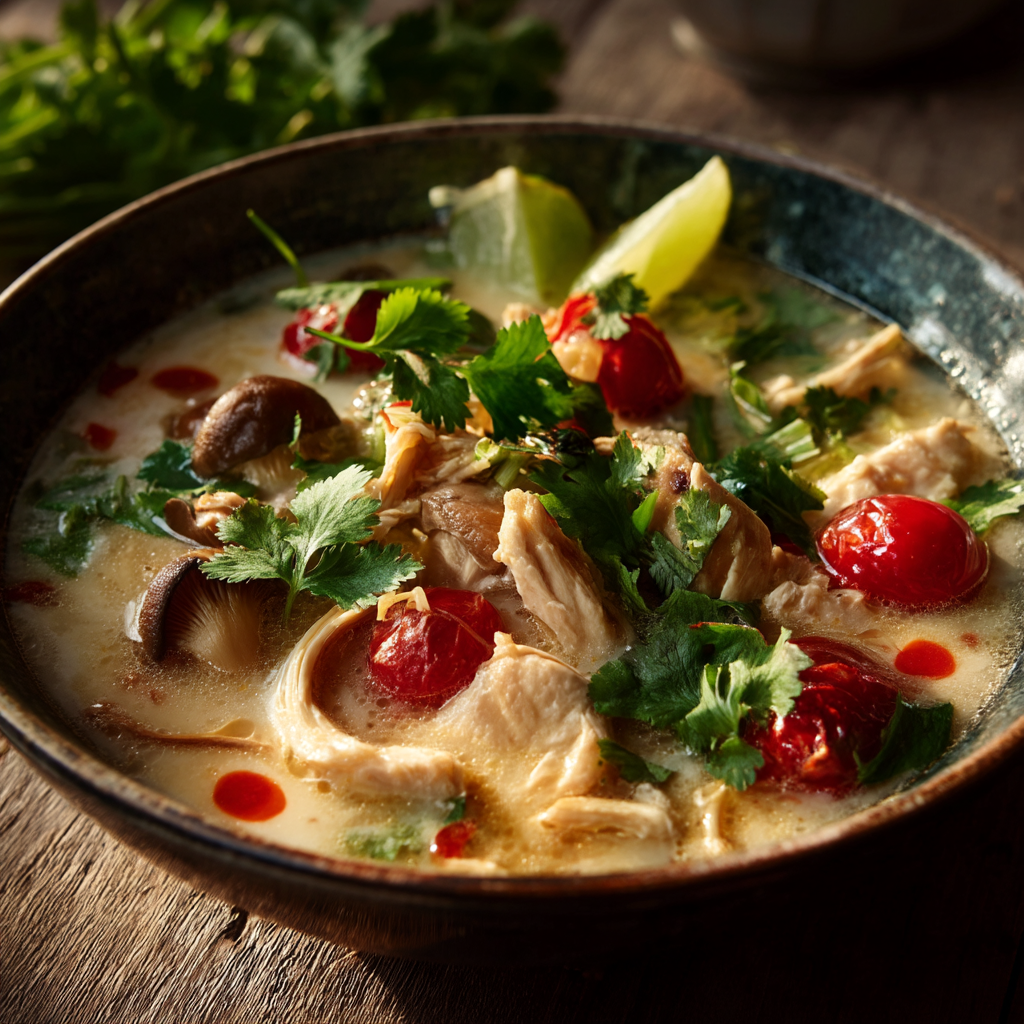
Thai Coconut Soup with Lemongrass-Poached Chicken
Recipe Overview
Dish Name: Thai Coconut Soup with Lemongrass-Poached Chicken Cuisine: Thai | Category: Soup Course | Serves: 4 Prep Time: 15 minutes | Cook Time: 25 minutes | Total Time: 40 minutes
Why This Works
This Thai coconut soup delivers the warmth you want on a rainy day without requiring a trip to an Asian market or a culinary degree. The technique here matters more than exotic ingredients: poaching chicken directly in the aromatic broth accomplishes two things at once. Your protein stays tender while releasing its juices into the soup, building a richer foundation than adding pre-cooked meat ever could.
The real secret is treating your aromatics with respect. Bruising lemongrass and galangal releases their volatile oils into the coconut milk base, creating that distinctive fragrance that makes Tom Kha Gai memorable. Most home versions fail because they rush this step. Give those aromatics ten minutes of gentle heat before adding anything else, and you will taste the difference in every spoonful.
Fish sauce and lime juice do the heavy lifting for seasoning. Balance them correctly and you will not need salt.
Ingredients (Serves 4)
For the Aromatic Base:
- 800ml full-fat coconut milk (two 400ml cans, do not use light versions)
- 500ml chicken stock, unsalted
- 3 stalks lemongrass, bottom 10cm only, outer layers removed, bruised and cut into 5cm pieces
- 60g fresh galangal, sliced into 3mm coins (ginger works in a pinch but changes the character)
- 6 fresh kaffir lime leaves, torn in half
- 4 Thai bird’s eye chilies, bruised (adjust to preference)
- 3 shallots, halved
For the Soup:
- 500g boneless skinless chicken thighs, sliced 5mm thick against the grain
- 200g oyster mushrooms, torn into bite-sized pieces
- 150g cherry tomatoes, halved
- 3 tablespoons fish sauce
- 1 tablespoon palm sugar or light brown sugar
- 60ml fresh lime juice (about 3 limes)
For Finishing:
- 30g fresh cilantro leaves, roughly chopped
- 2 spring onions, sliced thin on the bias
- Extra lime wedges for serving
- Steamed jasmine rice (optional, for serving alongside)
Method
Mise en Place (10 minutes)
Gather a heavy-bottomed pot or Dutch oven (4-litre capacity minimum), a wooden spoon or pestle for bruising aromatics, and a sharp knife. Slice your chicken thighs while they are still slightly chilled for cleaner cuts. Bruise the lemongrass by pressing firmly with the flat of your knife or giving each piece a few solid whacks with a pestle. The stalks should be visibly crushed but still intact. Tear your lime leaves to release their oils. Your galangal coins should be thin enough to infuse quickly but thick enough to fish out later.
Building the Coconut Milk Broth (10 minutes)
Combine the coconut milk and chicken stock in your pot over medium heat. Add the lemongrass, galangal, lime leaves, chilies, and shallots. Bring to a gentle simmer, not a boil. Coconut milk will break if you push it too hard. Let this infuse at a bare simmer for 10 minutes, stirring occasionally. The liquid should become fragrant and take on a slight yellow-green tinge from the aromatics. This step builds the entire flavor foundation of your soup.
Poaching the Chicken (8 minutes)
Add the sliced chicken thighs to the simmering broth, stirring gently to separate the pieces. The temperature will drop slightly. Return to a gentle simmer and cook for 5 minutes. Chicken thighs are forgiving and will not dry out as breast meat would. Add the oyster mushrooms and cherry tomatoes. Continue simmering for another 3 minutes until the mushrooms are tender and the tomatoes have softened but still hold their shape.
Seasoning and Balancing (2 minutes)
Remove the pot from heat. This is critical: adding lime juice to hot, simmering liquid makes it bitter. Stir in the fish sauce and palm sugar first, then add the lime juice. Taste and adjust. The soup should hit sour first, then salty, with sweetness rounding the edges. If it tastes flat, add more fish sauce. If it tastes too salty, add more lime. The balance between these two ingredients is what separates good Tom Kha from forgettable versions.
Finishing and Serving
Ladle the soup into deep bowls, distributing the chicken and vegetables evenly. Leave the lemongrass, galangal, and lime leaves in the bowl for presentation, but advise your guests these are for flavor, not eating. Top each bowl with fresh cilantro and spring onions. Serve immediately with lime wedges on the side and steamed jasmine rice if desired. Some prefer to add rice directly to the bowl. Others eat the soup as a standalone course.
What You Need to Know
How to make Thai coconut soup at home without specialty ingredients: Galangal is ideal, but fresh ginger substitutes at a 1:1 ratio with a slightly different, more peppery result. Frozen kaffir lime leaves work as well as fresh. If you cannot find either, add the zest of one lime during the infusion step. These substitutions alter the soup’s character but still produce something worth eating.
What makes this the best Thai soup for rainy days: The combination of hot, sour, and creamy hits comfort food territory that brothy soups cannot reach. Capsaicin from the chilies raises your body temperature while the fat in coconut milk provides lasting satiety. The aromatic oils from lemongrass and galangal have a subtle warming effect that persists long after the bowl is empty.
Common mistakes to avoid: Boiling coconut milk causes it to separate and look curdled. Keep everything at a gentle simmer. Overcooking the chicken turns it rubbery. Adding lime juice while the soup is still on heat creates a bitter, metallic taste. Fish sauce smells aggressive in the bottle but mellows completely when balanced with acid and sugar.
Make-ahead notes: The aromatic broth can be prepared up to 2 days ahead and refrigerated. Store it with the aromatics still in the liquid. When ready to serve, bring to a simmer, remove aromatics if desired, and proceed with adding chicken and vegetables fresh.
The Result
Your first spoonful should deliver a wave of coconut richness followed immediately by the bright punch of lime. The lemongrass and galangal provide an aromatic backbone that sits behind the primary flavors without demanding attention. Chicken thighs will be silky and moist, having absorbed some of the broth’s character while contributing their own richness. The mushrooms add textural variety and soak up the coconut milk like sponges. Cherry tomatoes offer bursts of acidity that cut through the richness.
The broth should be creamy but not heavy, with a glossy appearance and a pale golden color. Pools of red chili oil may form on the surface if you have used enough heat. Each bowl should feel restorative and substantial, the kind of food that genuinely improves a grey afternoon.
Nutrition Information Based on a 2,000 Calorie Diet (Per Serving)
| Nutrient | Amount | % Daily Value |
|---|---|---|
| Calories | 485 kcal | 24% |
| Total Fat | 38g | 49% |
| Saturated Fat | 28g | 140% |
| Cholesterol | 95mg | 32% |
| Sodium | 980mg | 43% |
| Total Carbohydrates | 18g | 7% |
| Dietary Fiber | 3g | 11% |
| Sugars | 9g | N/A |
| Protein | 28g | 56% |
| Vitamin C | 22mg | 24% |
| Iron | 3.2mg | 18% |
| Potassium | 620mg | 13% |
Flavor Balance
Sweet (4/10): Palm sugar and natural coconut milk sweetness provide a subtle foundation that rounds sharp edges without becoming noticeable.
Salty (6/10): Fish sauce delivers the primary salt component along with fermented depth. Chicken stock contributes secondary salinity.
Sour (7/10): Fresh lime juice dominates the flavor profile, providing the brightness that defines Tom Kha. Cherry tomatoes add supporting acidity.
Bitter (2/10): Minimal bitterness from the galangal’s peppery notes and slight tannins in the lemongrass. Keeps the soup interesting without harshness.
Umami (7/10): Fish sauce provides concentrated umami. Chicken thighs and oyster mushrooms contribute glutamates that give the broth its satisfying depth.
Wine Pairing
Recommended: Clare Valley Riesling, South Australia
Why: Australian Riesling from the Clare Valley presents the ideal partner for this Thai coconut soup. The wine’s pronounced acidity mirrors and amplifies the lime juice in the dish, creating a dialogue rather than a clash. Clare Valley Rieslings typically show citrus blossom and green apple notes that complement lemongrass aromatics without competing against them. The wine’s bone-dry finish cuts through coconut milk richness, refreshing the palate between spoonfuls. A slight petrol note that develops in quality Clare Valley Rieslings adds an unexpected aromatic bridge to the galangal’s peppery character. Serve well chilled, around 8°C.
Alternatives:
Adelaide Hills Pinot Gris: This wine offers more weight than Riesling while maintaining bright acidity. Stone fruit and pear notes complement the coconut milk’s natural sweetness, and the fuller body can stand up to the dish’s richness without being overwhelmed. Look for producers who ferment in stainless steel for maximum freshness. The textural quality of a good Pinot Gris matches the soup’s creamy mouthfeel while the acidity keeps everything lively.
Hunter Valley Semillon (young, unoaked): A classic Australian white that brings lemony acidity and a waxy texture perfectly suited to rich coconut broths. Young Hunter Semillon runs lean and citrus-driven, acting almost like a squeeze of lime in wine form. The low alcohol content (typically 10-11%) means you can enjoy a second glass without overwhelming your palate. As the wine warms slightly in the glass, it reveals honeyed notes that bridge to the palm sugar in the soup.
HACCP-Compliant Storage and Safety
Safe Cooling: Cool leftover soup from 60°C to 21°C within 2 hours, then from 21°C to 5°C within an additional 4 hours. Transfer to shallow containers (no deeper than 7cm) to accelerate cooling. Place containers in an ice bath or blast chiller if available. Do not leave soup at room temperature for more than 2 hours total.
Refrigeration: Store cooled soup in airtight containers at 5°C or below. Consume refrigerated soup within 3 days. Keep raw chicken separate from other ingredients during prep. Store fresh aromatics (lemongrass, galangal, lime leaves) in sealed bags in the refrigerator for up to 2 weeks.
Freezing: Freeze soup without the fresh herb garnish for up to 2 months at -18°C or below. Coconut milk may separate upon thawing; this is normal and corrects with gentle reheating and stirring. Label containers with date and contents. Allow frozen soup to thaw in the refrigerator (24 hours for 500ml portions) rather than at room temperature.
Reheating: Reheat soup to an internal temperature of 74°C throughout. Use a food thermometer to verify. Bring to a gentle simmer and hold for at least 2 minutes. Add fresh lime juice and herbs after reheating, as these degrade with repeated heating. Do not reheat more than once.
Disposal: Discard soup that has been held at temperatures between 5°C and 60°C for more than 4 cumulative hours. Dispose of any soup with off odors, unusual texture, or visible mold. When in doubt, discard.
