


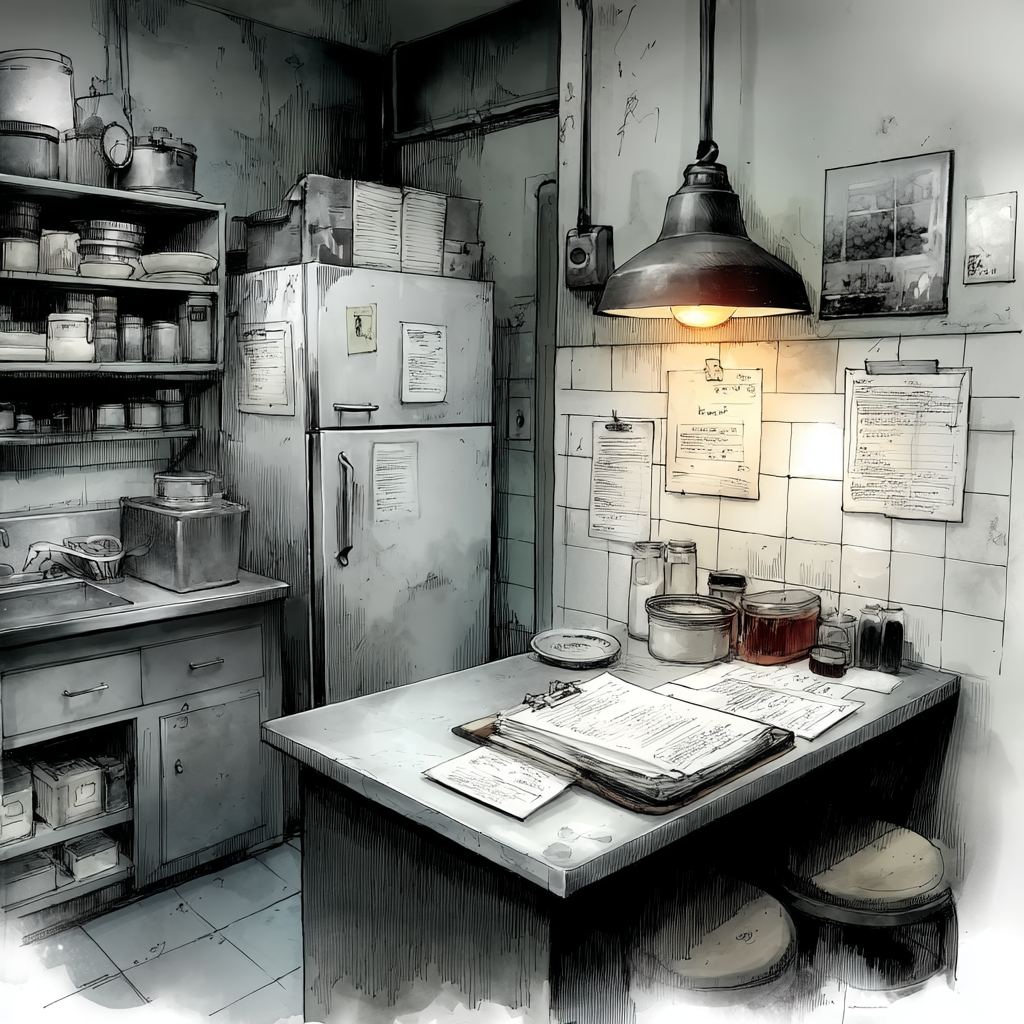
Restaurant Inventory Management: AI Won’t Save Your Restaurant
AI won’t save your restaurant. Restaurant inventory management will. Growth hides waste. Flat sales expose it. I have watched healthy brands bleed out in the walk-in, not the boardroom. The fix starts with a count, a forecast, and a promise you keep every week.
The walk-in tells the truth. Shelves stacked with duplicate SKUs. A pallet of capsicum because a buyer chased a rebate. Ten days of chicken sitting while marketing “sold out” a special you could never plate at scale. I have seen this on Collins Street and in Houston. In Bangkok and in Parramatta. The language changes. The waste smells the same.
AI sells hope. Operators need math. Restaurant inventory management is a system, not a feature. Units in, units out, yield by prep method, variance against sales mix, counted on a cadence the team trusts. The software helps you see. The habit helps you fix.
The night I stopped believing in dashboards, I sat in a Sydney dining room that looked busy. POS showed green. Food cost still climbed. The issue was not theft or recipes. It was the silent drift that happens when counts slip by a day, when par levels are guessed, when a chef swaps a 180 gram cut for a 200 gram because the supplier was light on the order. Small choices, repeated, turn margin into fog.
The invoice that would not sign itself sat in front of a CFO who wanted AI to “optimize.” We opened purchase history instead. Six suppliers for dairy. Three for onions. Discounts hid in volume brackets we never hit because buyers spread love around to keep calls friendly. We consolidated. We set contract pars. We tied delivery days to production plans. Boring work. It moved gross margin two points in eight weeks. That is the job.
How Restaurant Inventory Management Fixes Cash Burn
First, forecasting. Not generic demand curves. Your menu, your dayparts, your venue rhythms. In Melbourne winter you will sell more braises on Tuesdays and more salads when the first warm weekend hits in October. Link your forecast to historical sales by item, overlay weather and events, then adjust by promo plan. Keep it simple enough that a new manager can explain it without notes.
Second, recipe truth. Write gram weights, not vibes. Capture prep loss, trim, and cook-down. Record the oil that stays in the pan. Set tolerance bands by station. If your schnitzel spec is 220 grams raw and you are plating 250, you feel generous. You are also burning cash.
Third, supplier discipline. One owner told me avocados killed his brunch margin. He was not wrong. The fix was not a new toast. It was delivery frequency and ripeness control. We negotiated twice-weekly drops, added a ripening chart on the fridge, and trained the pass to reject soft fruit at 10 a.m. Saturday. Waste fell by half in two weeks. No AI. Only restaurant inventory management done like you mean it.
Fourth, count cadence. Pick a weekly full count window and protect it. Do quick spot counts daily for high-velocity items. Use a blind count on problem lines. If your team hates counts, lower the friction. Fewer SKUs. Cleaner labels. Clear bin locations. The goal is not a perfect number. It is a tighter loop.
Fifth, variance review. Pull theoretical versus actual usage by top twenty items every Monday. Sit with the chef, the buyer, the GM. Ask three questions. Did we forecast wrong. Did we portion wrong. Did we order wrong. Decide one correction per item. Do it for four weeks straight. Culture changes on week five.
When tech helps, use it. Computer vision that flags empty bins before service. Predictive ordering that respects your pars. OCR on invoices that maps pack sizes correctly. But tools only work when your team believes the standards. I have seen AI “identify shrink.” I have also seen a night porter move cases to the wrong shelf and trigger a false alarm. The system is only as strong as the counts you are willing to defend.
Boards love a platform demo. Investors love an LTV model. Guests love hot fries. You will not please all three if your back door lets money roll to the dumpster. Restaurant inventory management puts friction where it belongs, at the decision to buy, prep, and plate. It feels slower for a month. Then it feels like breathing.
A Brisbane group kept asking why their cost of goods was stuck. We walked the chain. Spec drift on proteins. Promo windows not tied to delivery schedules. A rogue prep list that doubled batch sizes on quiet days. We cut SKUs by 11 percent, locked the half dozen high-risk items to blind counts, and synced the specials calendar to logistics. Nothing heroic. Cash flow improved in a quarter. People got their weekends back. Funny how that works.
I still like AI. I want better alerts, better models, better camera reads on waste. I also know you do not automate standards you have not written. The order of operations matters. Teach the team to count. Teach them to forecast. Then teach the system to help them do it faster. Reverse the order and you teach excuses.
Leaders ask for strategy. Here it is. Treat restaurant inventory management as the spine. Everything else hangs off it. Menu engineering, production planning, labor scheduling, even marketing. If the forecast says you will not hit avocado ripeness on Sunday, do not run the green special. Run potatoes. Nobody tweets about that. Your P&L does.
I have made these calls across countries and formats. Sometimes I got it wrong. I trusted a noisy model. I skipped a week of counts. I paid for it. You will too. Then you tighten the loop. You go again. That is the work.
